
October 23, 2026
Home Advantage in 2026/27 vs the Last 10 Seasons
How strong is home advantage this season? Home, draw and away win rates in 13 leagues so far in 2026/27,...
Bet Delay; for many football bettors, the transition from manual betting to full automation feels like the ultimate “level up.” The idea is simple: build a winning model in the Predictology System Builder, connect it to an execution tool like BF Bot Manager, and let the profits roll in while you sleep.
Update, 14 October 2026: Autobet, which sent Predictology picks to BF Bot Manager, stops on 17 October 2026. The Bot Manager and automated-betting steps in this article won’t work with Predictology after that. Everything else in Predictology works as before.
However, many professional traders will tell you that the gap between a backtested system and a live automated portfolio is often bridged by two silent killers: bet delay and slippage.
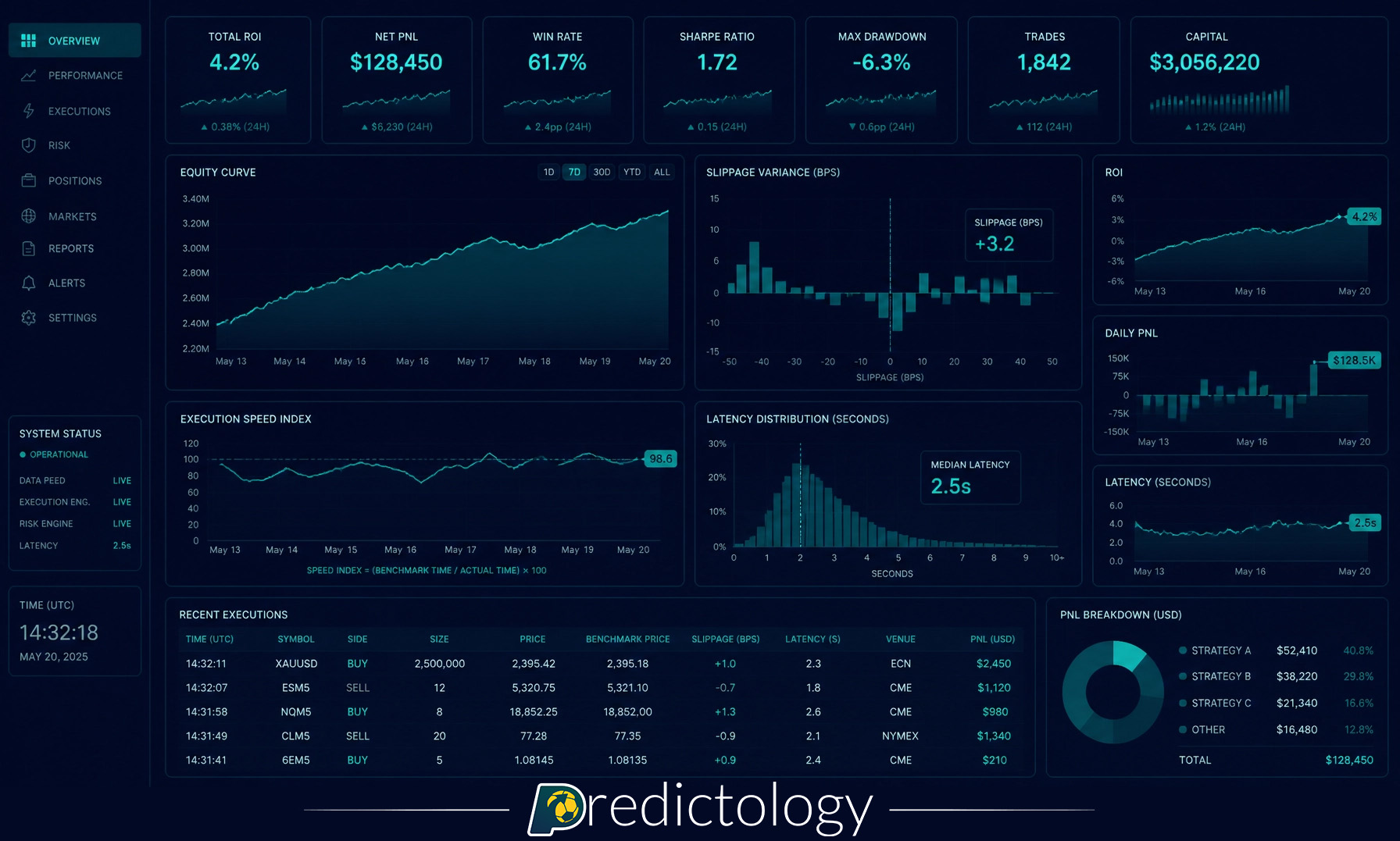
In a world where arbitrage and value margins often sit between 1% and 5%, losing even a single “tick” of price or facing a 5-second execution delay can turn a high-performing strategy into a bankroll drain. This guide breaks down the technical reality of automation slippage and how you can engineer your systems to thrive despite it.
Slippage is the difference between the price you see when your bot triggers a signal and the price at which the bet is actually matched on the exchange.
In high-liquidity markets like the English Premier League Match Odds, slippage is usually minimal. But as you move into lower leagues or niche markets: where many of the best value opportunities reside: liquidity thins out. When your bot sends an order to back a team at 2.10, but the available liquidity at that price is only £10, the remainder of your stake might be matched at 2.08 or lower.
While a 0.02 difference seems negligible, the math tells a different story. If your system has a theoretical ROI of 4%, losing two ticks on every trade effectively cuts your profit margin in half.

If you’ve ever traded live on Betfair, you’ve seen the “countdown” timer. This is the Bet Delay, a mandatory 1-to-8 second pause implemented by exchanges to protect against “courtsiding” (people at the stadium betting on events before they appear on the TV broadcast).
In automated betting, this delay is a double-edged sword. While it levels the playing field, it also creates a “latency window” where the market can move against you while your bet is sitting in the queue.
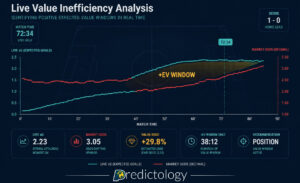
Research into sports betting automation shows that odds updates typically lag by 2 to 10 seconds, and bet placement processing takes another 1 to 5 seconds. During a high-stakes match, the true state of the game can change significantly in that 15-second window.
If your bot triggers a bet because the xG (Expected Goals) data suggests a high probability of a goal, but the goal is scored during your 5-second bet delay, your bet might be matched at a price that no longer represents value: or worse, cancelled entirely, leaving you with an unhedged position.

To manage these traps like a pro, you must move beyond simple “if X, then bet Y” logic. You need to build execution buffers into your automation.
Never allow your bot to “take any price.” In the Predictology interface, you can identify the historical “Value Price.” When setting up your execution in BF Bot Manager, ensure you set a strict limit. If your model says the value is at 2.00, but slippage pushes the available price to 1.98, the bot should be instructed to “kill” the order rather than fill it at a loss.
Exchange prices move in specific increments (ticks). Professional traders often set their bots to request odds one or two ticks higher than the current market price, waiting for the market to come to them. This “Passive Execution” reduces slippage but carries the risk of the bet not being matched at all.
Many beginners forget that slippage isn’t just about price; it’s about the net return. When evaluating your strategy in our System Builder, always toggle the commission settings to match your exchange rate (e.g., 2% or 5%). This ensures your “Value Index” is calculated on real-world net returns, not theoretical gross profits.
To successfully automate, your workflow should look like a professional trading desk. You aren’t just “punting”; you are managing an order flow.

Use Predictology to identify +EV opportunities based on massive historical datasets (400k+ matches). Our models already account for historical closing prices, which gives you a realistic baseline for what price you should expect.
Before sending a bet to the exchange, your bot should check the Volume in the market. If you are trying to place a £50 bet into a market with only £100 total matched volume, you are guaranteed to suffer heavy slippage. Set a minimum liquidity filter to ensure your stake is a small percentage of the available pool.
For in-play strategies, consider adding a manual delay on top of the exchange delay. By waiting for the market to settle after a major event (like a red card or a goal), you avoid the “volatility spike” where slippage is at its highest.
One of the most frequent errors we see is traders backtesting using “Closing Odds” but expecting to get those same odds via automation without accounting for the delay. As we discussed in our guide on common backtesting mistakes, your model’s success depends on the quality of your data inputs.
If your backtest shows a 5% ROI but doesn’t account for a 1-tick slippage, your real-world result will likely be 0% or negative. Always “stress test” your models by reducing the odds of every winning bet by one tick in your spreadsheets to see if the strategy remains robust.
Automation is not a “set and forget” solution; it is a tool for scale. The difference between a profitable trader and a “blown bankroll” often comes down to these technical nuances. By understanding that latency is the enemy and slippage is a cost of business, you can adjust your stake sizes and price limits accordingly.
Your Next Step:
Review your current automated strategies. Are you tracking your “Actual vs. Predicted” match price? If your average matched price is consistently lower than your model’s trigger price, it’s time to tighten your liquidity filters or adjust your entry timing.
Ready to start building data-driven models that stand up to the rigors of live execution? Explore our pricing and membership options to get full access to the System Builder and +EV Strategy tools used by professional traders worldwide.
October 23, 2026
How strong is home advantage this season? Home, draw and away win rates in 13 leagues so far in 2026/27,...
October 23, 2026
How often do half-time leads hold? Win, draw and defeat rates for half-time leaders in 13 leagues so far in...
October 23, 2026
Favourites, draws and goals in 2026/27 so far compared with the previous 10 seasons across 13 leagues, from the Predictology...
October 23, 2026
Expected Goals (xG); many recreational bettors spend their Saturday afternoons fixated on the final whistle. They track full-time results, late...
October 23, 2026
In the world of football betting, 2026 marks a significant turning point. Just a few years ago, Expected Goals (xG)...
October 23, 2026
How strong is home advantage this season? Home, draw and away win rates in 13 leagues so far in 2026/27,...
October 23, 2026
How often do half-time leads hold? Win, draw and defeat rates for half-time leaders in 13 leagues so far in...
October 23, 2026
Favourites, draws and goals in 2026/27 so far compared with the previous 10 seasons across 13 leagues, from the Predictology...
October 23, 2026
Expected Goals (xG); many recreational bettors spend their Saturday afternoons fixated on the final whistle. They track full-time results, late...
October 23, 2026
In the world of football betting, 2026 marks a significant turning point. Just a few years ago, Expected Goals (xG)...
Join the Discussion
We respect your privacy — your email won’t be shown. Fields marked * are required.