September 20, 2026
Beyond the Full-Time Result: Profiting from 1st Half Goals and xG Trends
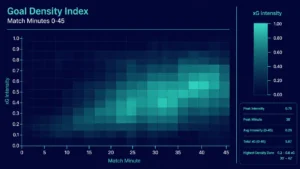
Expected Goals (xG); many recreational bettors spend their Saturday afternoons fixated on the final whistle. They track full-time results, late...
Betting Bot; the landscape of sports betting in 2026 has shifted fundamentally. Gone are the days when a casual glance at the league table and a “gut feeling” were enough to maintain a long-term edge. Today, the markets are driven by data, and the most successful participants are increasingly turning to automation.
A Betting Bot: a software programs designed to execute trades and wagers based on predefined logic: have moved from the fringes of the professional gambling world into the mainstream. At Predictology, we have seen a 40% increase in users seeking automated solutions over the past year. But why the sudden surge in interest, and more importantly, how can you transition into automation without risking your entire bankroll?
The primary reason everyone is talking about betting bots isn’t just about convenience; it’s about the elimination of human frailty. Humans are naturally susceptible to cognitive biases. Whether it is the “hot-hand fallacy,” where we believe a team’s winning streak must continue indefinitely, or “loss aversion,” which causes us to make irrational, larger bets to recoup losses, our brains are often our own worst enemies in a betting environment.
Bots operate on logic. They do not get tired, they do not feel “tilted” after a 90th-minute equalizer ruins a parlay, and they do not deviate from the plan. By using a systematic approach, you transform betting from a high-stakes emotional rollercoaster into a structured investment process.

In modern sports markets, value is often ephemeral. Prices move in milliseconds as team news breaks or large volumes of money enter the exchange. A human bettor might take 30 to 60 seconds to open an app, find the market, and place a bet. In that time, the “value”: the gap between the bookmaker’s price and the actual probability of the event: has often vanished.
Betting bots can scan thousands of markets simultaneously and execute a trade in under 200 milliseconds. This speed allows automated strategies to capture “Closing Line Value” (CLV) far more consistently than manual betting.
Before you deploy a single pound or dollar into an automated system, you must have a framework. A bot is only as intelligent as the instructions you provide. At Predictology, we advocate for a four-pillar approach to strategy design.
A common mistake is being too vague with your bot’s instructions. A strategy like “Bet on the home favorite if they are high in the table” is a recipe for failure. A professional-grade bot strategy requires specific data points.
For example: “Place a Back bet on the Home Team if their xG (Expected Goals) over the last five games is >1.8, the Away Team’s xGA (Expected Goals Against) is >1.5, and the available odds are 2.10 or higher.” By using specific metrics found in our Insights and Tutorials, you ensure your bot is looking for a mathematical edge, not just a general trend.
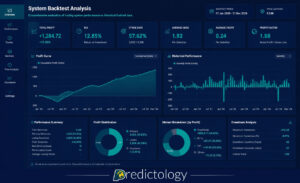
You wouldn’t buy a car without checking its history; you shouldn’t run a betting strategy without testing it against historical data. This is where many bettors fail. They create a “system,” run it live, lose money, and then wonder why.
Predictology’s core features allow you to run your strategy against over 10 years of historical football data. If your strategy resulted in a -5% ROI over the last three seasons, it is highly unlikely to suddenly become profitable tomorrow. Backtesting provides the statistical confidence necessary to weather the inevitable periods of variance.
Not all markets are suitable for bots. Automation thrives in high-liquidity markets like the English Premier League, UEFA Champions League, or major tennis tournaments. In low-liquidity markets, a bot’s own bets can move the price against itself, eroding the value. When setting up your strategy, focus on markets where the volume is high enough to absorb your stakes without triggering massive price fluctuations.
Your staking plan is your survival mechanism. Even a +EV (Expected Value) strategy will have losing streaks. A bot can place 50 bets in a single Saturday morning; if your stake is 10% of your bankroll per bet, a bad morning could wipe you out.
Most professional bot users adhere to a flat staking model of 0.5% to 1.5% of their total bankroll per trade. This ensures that the “law of large numbers” has time to work in your favor.

Safety in betting automation covers two areas: technical security and financial risk management.
When you use a bot, you are often connecting it to a betting exchange via an API (Application Programming Interface). It is vital to use reputable platforms and keep your API keys secure. Never share your login credentials with third-party “black box” bot providers who do not explain how their logic works. Transparency is the hallmark of a safe setup.
A common misconception is that a betting bot is a “money printer” that you can set and forget. This is the fastest way to lose your bankroll. Markets evolve. A strategy that worked in 2023 might be “priced in” by the market by 2026.
You must maintain a “Human in the Loop” philosophy. This involves:
If you are new to this, we highly recommend reading our guide on 7 mistakes you’re making with betting automation to avoid common technical and logical pitfalls.

We believe in a realistic approach to sports analytics. Betting bots are powerful, but they are not magic. They have limitations that every bettor must acknowledge:
At Predictology, we don’t just provide a list of “tips.” We provide the engine. Our platform is designed for the bettor who wants to build, test, and refine their own systematic approach. With coverage of over 60,000 matches per year and deep-dive analytics on everything from corners to xG, we provide the data necessary to fuel a sophisticated automated strategy.
The goal isn’t to find a “get rich quick” bot. The goal is to build a robust, data-driven process that identifies value more accurately and faster than the general public.
If you are ready to move toward automated betting, do not start by looking for software. Start with the data.
Automation is the future of sports betting, but only for those who respect the complexity of the markets. By focusing on process over outcome, and data over instinct, you place yourself in the top percentile of bettors globally.
Ready to start building? Explore our pricing plans and join the community of data-driven bettors today.
September 20, 2026
Expected Goals (xG); many recreational bettors spend their Saturday afternoons fixated on the final whistle. They track full-time results, late...
September 20, 2026
In the world of football betting, 2026 marks a significant turning point. Just a few years ago, Expected Goals (xG)...
September 20, 2026
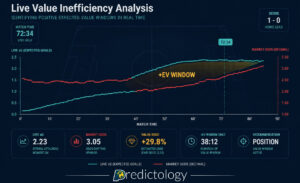
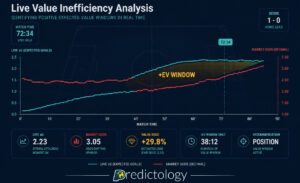
Expected Value (+EV) For the majority of football bettors, the live market is a whirlwind of emotion, reaction, and guesswork....
September 20, 2026
System Builder; for most football bettors, the journey starts with a gut feeling. You see a home team with a...
September 20, 2026
Analytics; to move from a casual punter to a professional bettor, you must transition from making “picks” to executing a...
September 20, 2026
Expected Goals (xG); many recreational bettors spend their Saturday afternoons fixated on the final whistle. They track full-time results, late...
September 20, 2026
In the world of football betting, 2026 marks a significant turning point. Just a few years ago, Expected Goals (xG)...
September 20, 2026
Expected Value (+EV) For the majority of football bettors, the live market is a whirlwind of emotion, reaction, and guesswork....
September 20, 2026
System Builder; for most football bettors, the journey starts with a gut feeling. You see a home team with a...
September 20, 2026
Analytics; to move from a casual punter to a professional bettor, you must transition from making “picks” to executing a...
Join the Discussion
We respect your privacy — your email won’t be shown. Fields marked * are required.