September 20, 2026
Beyond the Full-Time Result: Profiting from 1st Half Goals and xG Trends
Expected Goals (xG); many recreational bettors spend their Saturday afternoons fixated on the final whistle. They track full-time results, late...
+EV Betting; for the vast majority of sports bettors, the primary focus is on “who will win the game.” They look at form, injuries, and motivation. While these factors are important, they are only half of the equation. Professional bettors: those who actually extract a long-term profit from the markets: focus on a different metric entirely: Expected Value (EV).
If you want to move from being a casual punter to a systematic, data-driven bettor, you need to understand +EV betting and, more importantly, how to beat the “Closing Line.” This guide will break down the mechanics of value betting and show you how to use Predictology’s tools to build a system that stands the test of time.
Positive Expected Value – +EV betting – isn’t about predicting the future; it’s about identifying instances where the probability of an outcome is higher than the probability implied by the bookmaker’s odds.
In every betting market, the odds represent the bookie’s “price.” If a bookmaker offers odds of 2.00 (+100 in American odds), they are implying there is a 50% chance of that event happening (before their commission, or “vig,” is added). If your data and analysis suggest the real probability is actually 55%, you have found a +EV bet.
The formula for Expected Value is straightforward:
EV = (Probability of Winning * Amount Won per Bet) – (Probability of Losing * Amount Lost per Bet)
If the result is positive, it’s a bet worth taking. Over a large enough sample size, betting on outcomes with a +EV will mathematically result in a profit, regardless of the outcome of any single individual game. This is the same principle that allows casinos to remain profitable; they don’t know who will win the next hand of blackjack, but they know the math is in their favor over 10,000 hands.

If you want to know if you are a winning bettor before the game even starts, look at the Closing Line Value (CLV).
The “Closing Line” is the final set of odds offered by bookmakers just before an event begins. Because the market has had hours or days to absorb all available information: lineups, weather, sharp money, and public sentiment: the closing line is widely considered the most accurate representation of the true probability of an outcome.
In betting terms, “beating the line” means you placed your bet at odds better than the closing odds. For example, if you backed a team at 2.10 on Friday and they close at 1.90 on Saturday, you have secured significant CLV.
Data shows that bettors who consistently beat the closing line by 2% to 5% are almost guaranteed to be profitable over the long term. This is because the market is “efficient.” By the time the game kicks off, the price has usually moved to a point where there is no value left. By getting in early at a better price, you are essentially buying an asset for less than its true market value.
Building a system that beats the market requires moving away from “gut feel” and toward rigorous data analysis. At Predictology, we provide the infrastructure to do this at scale.
You cannot know if a strategy is +EV unless you test it against historical data. Using a database of over 350,000 matches, you can identify specific conditions where bookmakers historically misprice odds.
For instance, you might find that certain mid-table teams are consistently undervalued when playing away from home after a loss. By backtesting this theory, you can see if “blindly” following that trend would have beaten the closing line over the last five seasons. If the data supports it, you have the foundation of a +EV system.
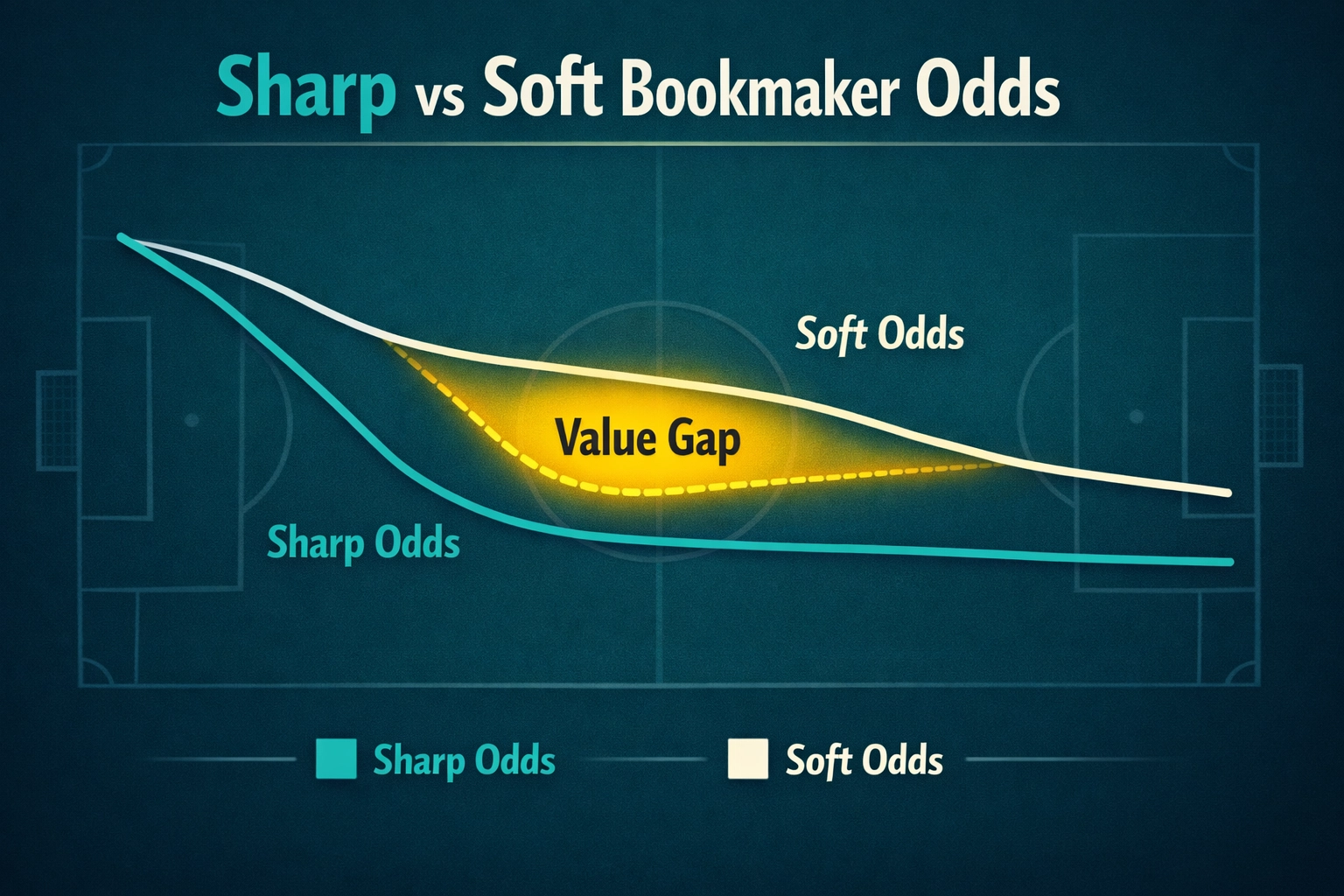
Not all bookmakers are equal. “Sharp” bookmakers (like Pinnacle) move their lines based on high-volume, professional money. “Soft” bookmakers (often domestic UK or European books) are slower to react.
A core +EV strategy involves watching the movement on sharp books and placing bets on soft books before they have a chance to adjust their prices. If a sharp book moves from 2.00 to 1.85, but your local bookie is still sitting at 2.00, you have an immediate +EV opportunity.
One of the biggest hurdles to +EV betting is the “vig” or vigorish. This is the margin the bookmaker builds into the odds to ensure they make a profit.
To be a successful +EV bettor, your edge must be greater than the vig. For example, if a bookmaker has a 5% margin on a Premier League match, your analytical edge needs to be at least 6% to realize a profit. This is why Line Shopping is non-negotiable. Using multiple accounts to find the best available price is the easiest way to reduce the impact of the vig on your bottom line.
How do you know if your system is actually working? You track your CLV.
Calculate your edge using this formula:
(Your Odds / Closing Odds) – 1
If you bet at 2.10 and the line closes at 2.00, your CLV is 5% (2.10 / 2.00 = 1.05). If, over a sample of 500 bets, your average CLV is 3%, you are outperforming the market. Even if you are currently in a “losing streak” in terms of actual bankroll, the CLV metric tells you that your process is correct and that the results will eventually normalize.
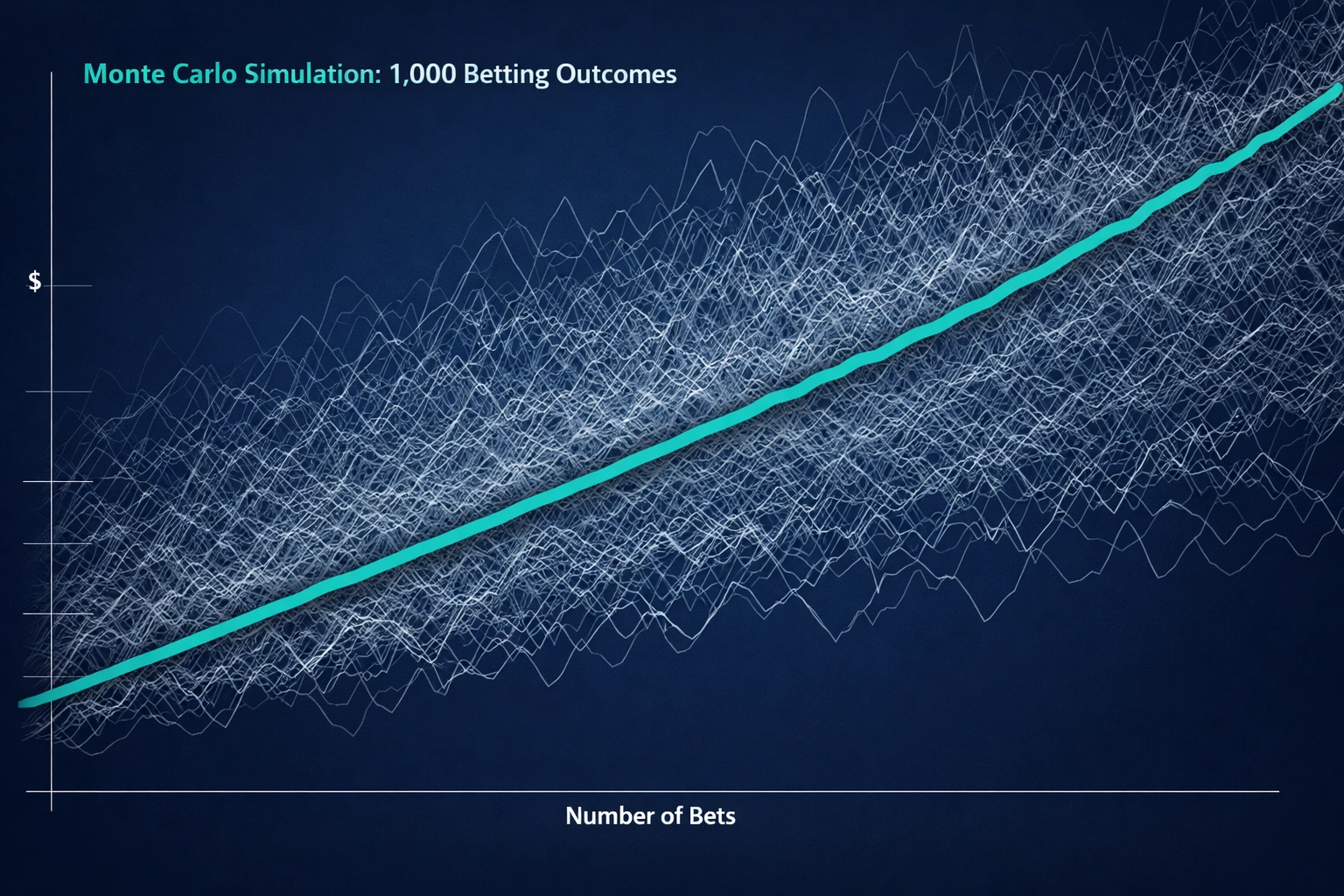
It is crucial to remember that +EV does not mean “guaranteed win.” You can beat the closing line on ten consecutive bets and still lose all ten. This is variance.
High-volume +EV betting is a game of margins. You are looking for a small edge played out over thousands of iterations. This is why understanding betting automation is so valuable: it allows you to execute your system without the emotional interference that often comes with short-term losses.
Even with the best tools, bettors often fall into traps that erode their edge.
For more on avoiding these errors, check out our guide on common betting automation mistakes.
If you are ready to stop guessing and start treating betting like an investment, follow this implementation checklist:
The market is a puzzle. The closing line is the solution. Your job as a +EV bettor is simply to find the pieces before the rest of the world puts them together.
Ready to start building your own data-driven systems? Explore our pricing plans and get access to the same tools used by professional analysts worldwide.
September 20, 2026
Expected Goals (xG); many recreational bettors spend their Saturday afternoons fixated on the final whistle. They track full-time results, late...
September 20, 2026
In the world of football betting, 2026 marks a significant turning point. Just a few years ago, Expected Goals (xG)...
September 20, 2026
Expected Value (+EV) For the majority of football bettors, the live market is a whirlwind of emotion, reaction, and guesswork....
September 20, 2026
System Builder; for most football bettors, the journey starts with a gut feeling. You see a home team with a...
September 20, 2026
Analytics; to move from a casual punter to a professional bettor, you must transition from making “picks” to executing a...
September 20, 2026
Expected Goals (xG); many recreational bettors spend their Saturday afternoons fixated on the final whistle. They track full-time results, late...
September 20, 2026
In the world of football betting, 2026 marks a significant turning point. Just a few years ago, Expected Goals (xG)...
September 20, 2026
Expected Value (+EV) For the majority of football bettors, the live market is a whirlwind of emotion, reaction, and guesswork....
September 20, 2026
System Builder; for most football bettors, the journey starts with a gut feeling. You see a home team with a...
September 20, 2026
Analytics; to move from a casual punter to a professional bettor, you must transition from making “picks” to executing a...


Join the Discussion
We respect your privacy — your email won’t be shown. Fields marked * are required.