October 17, 2026
How Often Do Half-Time Leads Hold? 2026/27 vs the Last 10 Seasons
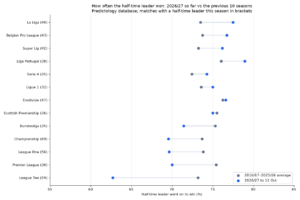
How often do half-time leads hold? Win, draw and defeat rates for half-time leaders in 13 leagues so far in...
Backtesting; how many times have you had a “gut feeling” about a specific league or a type of bet, only to see your bankroll slowly dwindle over a month? We’ve all been there. In the world of football betting, intuition is often the quickest path to a losing streak.
If you want to move from being a casual punter to a systematic bettor, you need to stop guessing and start testing. This is where backtesting comes in. It is, quite literally, a time machine for your betting ideas. Instead of spending six months and thousands of pounds testing a theory in real-time, you can run that same theory against a decade of historical data in about twenty minutes.
At Predictology, we built our System Builder specifically to handle this heavy lifting. Let’s dive into how you can use historical data to build a system that actually stands a chance against the bookies.
In its simplest form, backtesting is the process of applying a set of betting rules to past football matches to see how they would have performed. It allows you to answer the most important question in betting: “If I had placed these bets over the last five years, would I be in profit or broke?”
The beauty of backtesting is that it removes emotion. The data doesn’t care that you’re a lifelong Liverpool fan or that you “just have a feeling” about the Bundesliga this weekend. It only cares about the numbers. By using historical data, you can identify patterns that are statistically significant rather than just coincidental.
Most bettors fail because they react to what happened last week. If the last four “Over 2.5 Goals” bets won, they think they’ve found a goldmine. In reality, that’s a meaningless sample. To find a true mathematical edge, you need to look at hundreds, if not thousands, of matches across multiple seasons.
Before you touch the Predictology System Builder, you need a clear hypothesis. You can’t just “look for winners.” You need a specific angle.
Ask yourself:
By narrowing your focus, you prevent the “noise” of unrelated data from clouding your results. If you’re interested in the fundamentals of this process, check out our guide on how to build and test your own profitable football betting systems.
This is where the magic happens. Our System Builder allows you to filter through a massive database of historical matches using hundreds of variables.
When building your system, don’t just look at wins and losses. Consider these predictive metrics:

Using the System Builder, you can toggle these filters and instantly see the historical ROI (Return on Investment). If a strategy looks great in the Premier League but loses money in La Liga, you can instantly refine your parameters to focus only on the profitable regions.
Once you’ve run your backtest, the System Builder will spit out a report. This is where you need to be a cold-blooded analyst. There are three key numbers you must look at:
If your ROI is negative, the strategy is dead. Period. However, if your ROI is +20% over 5,000 bets, you’ve likely found something incredible. Most professional systems aim for a consistent ROI of 3% to 8%. Anything higher often suggests a small sample size or “overfitting” (which we’ll get to in a moment).
A system that wins 80% of the time sounds great, but if the average odds are 1.10, you’re one loss away from a disaster. Conversely, a system with a 30% win rate can be highly profitable if the average odds are 4.00. You need to ensure the win rate aligns with the expected value (EV).
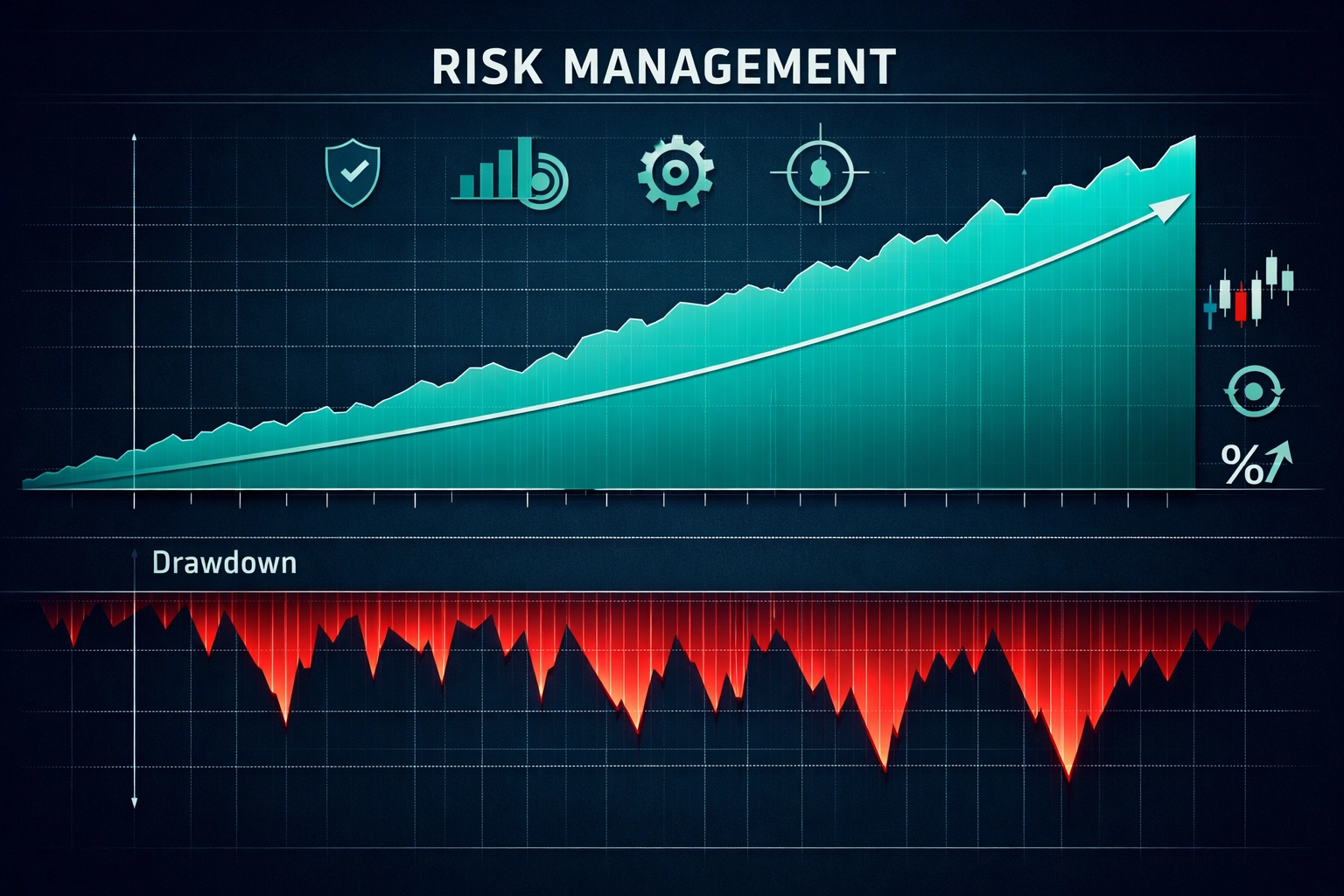
This is the most overlooked stat. The maximum drawdown tells you the longest “losing streak” or the biggest dip in your bankroll during the test period. If a system results in a 20-unit loss at its worst point, do you have the bankroll: and the mental toughness: to keep betting during that period?
Understanding the maths of winning and EV is crucial here. If the math says the system works, the drawdown is just variance.
One of the biggest mistakes in backtesting is overfitting. This happens when you add so many filters that your system only works for that specific set of past data.
For example, if you say “bet on a home team if it’s raining, the striker is wearing blue boots, and it’s a Tuesday,” you might find a 100% win rate over five games. But that’s not a system; that’s a coincidence.
Keep it simple. The most robust systems usually rely on 3 to 5 core variables. If a system requires 15 different conditions to be met to find a bet, it will likely fail when applied to future matches.
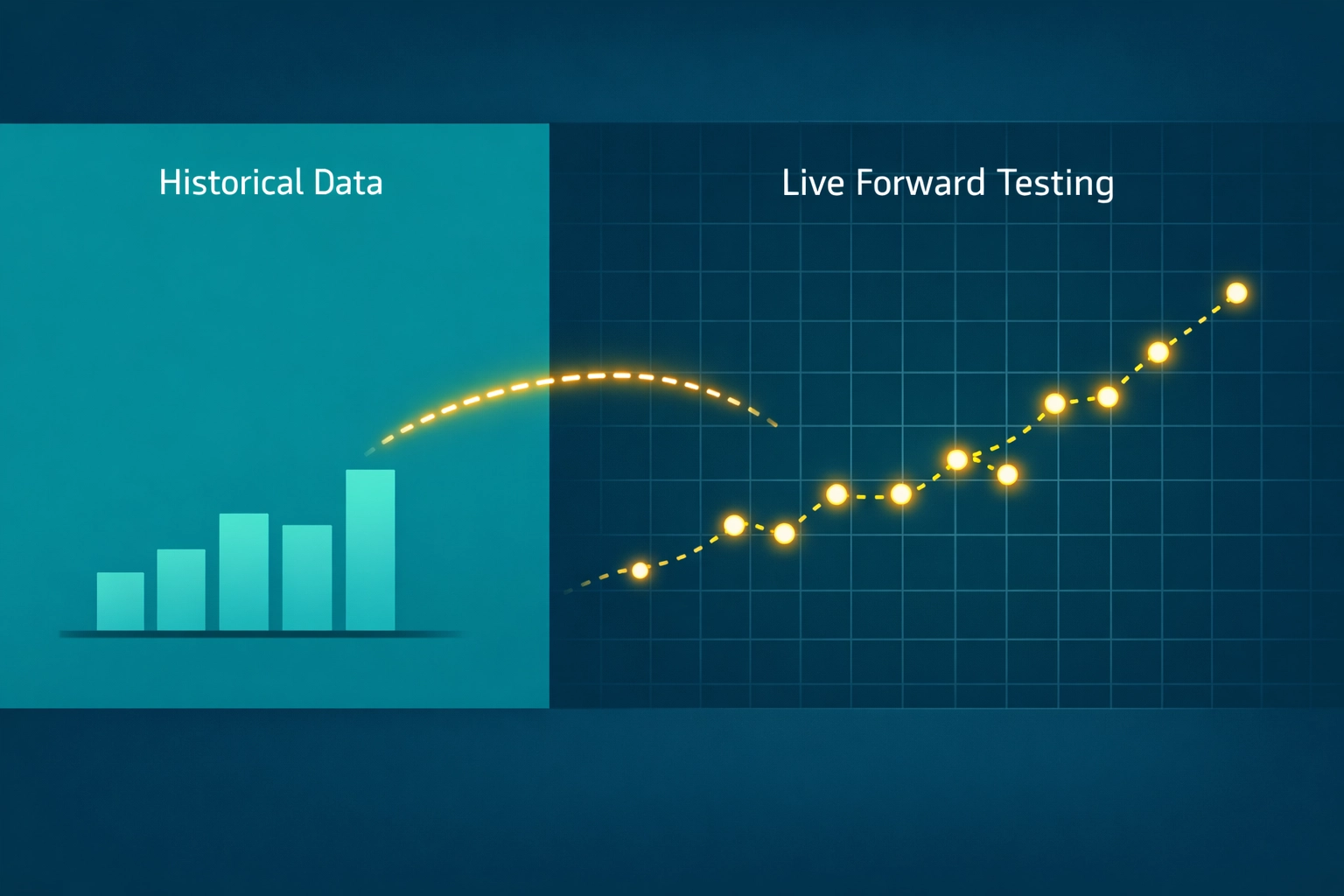
Once you have a system that shows a positive ROI in a backtest, don’t go all-in with your life savings immediately. The next step is forward testing.
Apply your rules to the upcoming weekend’s fixtures. Track the results in a spreadsheet or through the Predictology dashboard without placing real money. This confirms that the “edge” you found in the historical data still exists in the current market conditions.
The markets are dynamic. What worked in 2018 might not work in 2026 because bookmakers adjust their models. Forward testing for 4-6 weeks gives you the final layer of confidence. For those looking to take it a step further, automated football betting can help you execute these systems 24/7 once they are proven.
Building a winning football system isn’t about being a genius; it’s about being disciplined. By using the Predictology System Builder, you are giving yourself a massive advantage over the average bettor who is still betting based on the “eye test.”
Your Next Step:
Log into your Predictology account and pick one league. Use the System Builder to test a simple theory: perhaps focusing on home favorites coming off a loss. Run the test for the last three seasons and look at the ROI. Whether the result is positive or negative, you’ve just learned more about the market in five minutes than most punters learn in a year.
Stop guessing. Start testing. The data is waiting.
October 17, 2026
How often do half-time leads hold? Win, draw and defeat rates for half-time leaders in 13 leagues so far in...
October 17, 2026
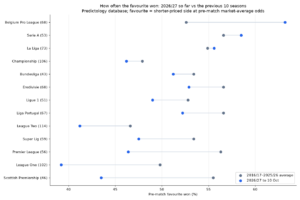
Favourites, draws and goals in 2026/27 so far compared with the previous 10 seasons across 13 leagues, from the Predictology...
October 17, 2026
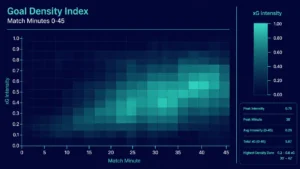
Expected Goals (xG); many recreational bettors spend their Saturday afternoons fixated on the final whistle. They track full-time results, late...
October 17, 2026
In the world of football betting, 2026 marks a significant turning point. Just a few years ago, Expected Goals (xG)...
October 17, 2026
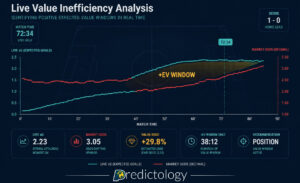
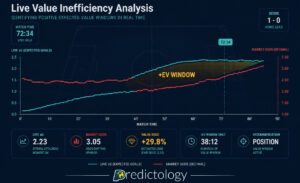
Expected Value (+EV) For the majority of football bettors, the live market is a whirlwind of emotion, reaction, and guesswork....
October 17, 2026
How often do half-time leads hold? Win, draw and defeat rates for half-time leaders in 13 leagues so far in...
October 17, 2026
Favourites, draws and goals in 2026/27 so far compared with the previous 10 seasons across 13 leagues, from the Predictology...
October 17, 2026
Expected Goals (xG); many recreational bettors spend their Saturday afternoons fixated on the final whistle. They track full-time results, late...
October 17, 2026
In the world of football betting, 2026 marks a significant turning point. Just a few years ago, Expected Goals (xG)...
October 17, 2026
Expected Value (+EV) For the majority of football bettors, the live market is a whirlwind of emotion, reaction, and guesswork....
Join the Discussion
We respect your privacy — your email won’t be shown. Fields marked * are required.