October 17, 2026
How Often Do Half-Time Leads Hold? 2026/27 vs the Last 10 Seasons
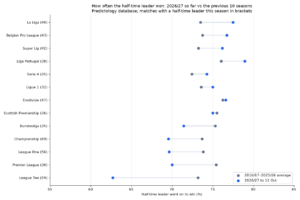
How often do half-time leads hold? Win, draw and defeat rates for half-time leaders in 13 leagues so far in...
Football Betting Systems; for the majority of bettors, football is a game of intuition, “gut feelings,” and late-night impulses. However, for those who treat sports as an asset class, success is built on a foundation of data, rigorous testing and mathematical edges. Transitioning from a recreational bettor to a professional analyst requires a shift in mindset: you are no longer betting on teams; you are betting on probabilities.
To achieve long-term success, you need to move away from individual match predictions and start focusing on football betting systems. A systematic approach removes emotion from the equation and allows you to identify profitable betting models that can withstand the natural variance of the sport.
In this guide, we will walk through the exact methodology required to build a betting system that works, leveraging the power of the Predictology System Builder to turn raw data into actionable insights.
Before you input a single filter into a database, you must understand what a “system” actually is. A betting system is a set of rules that identifies value by comparing your calculated probability of an event against the odds offered by the bookmaker.
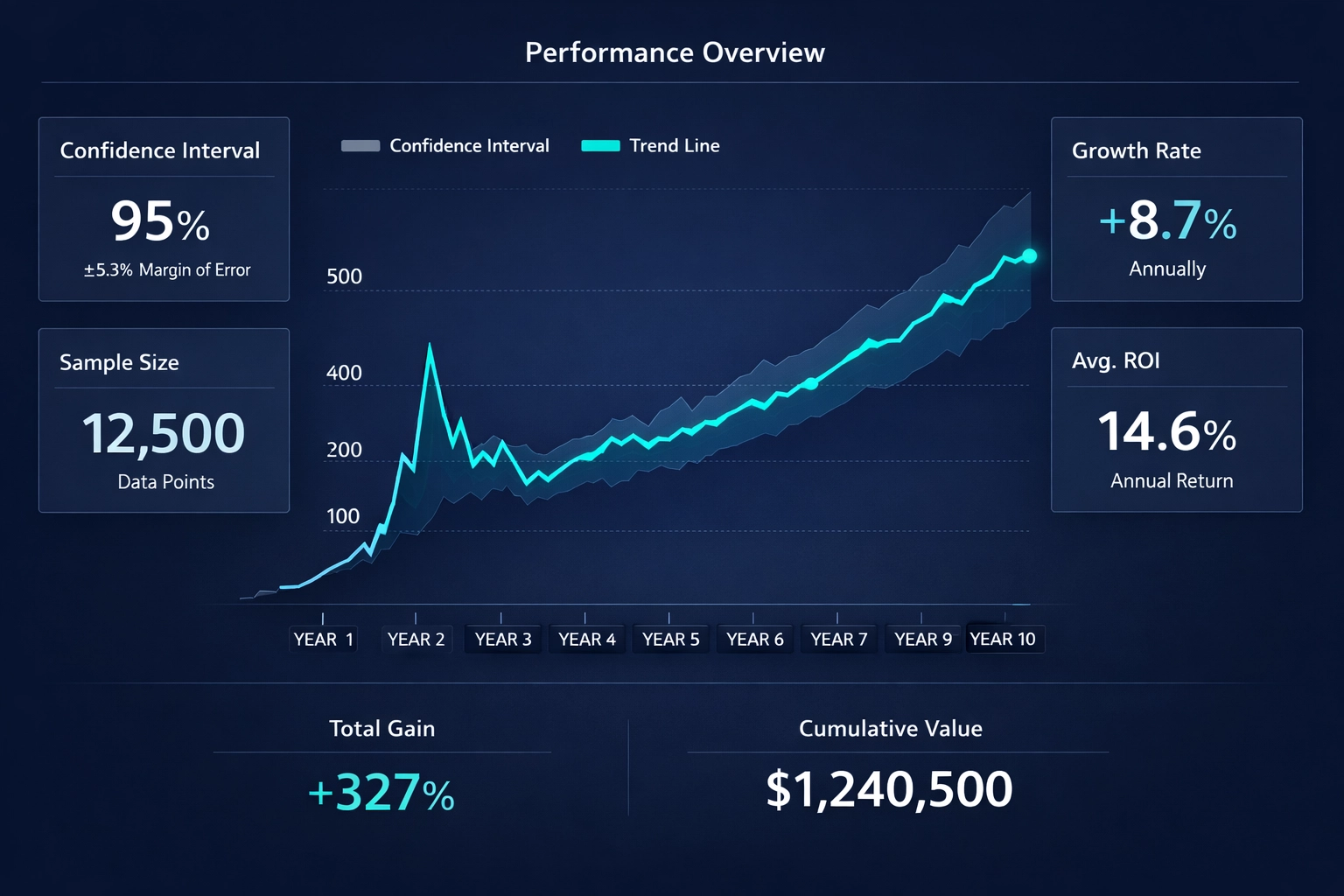
The biggest mistake amateur bettors make is “recency bias”: placing a bet because a team has won their last three games. Truly profitable football betting systems requires statistical significance. This means your system must be tested over hundreds, if not thousands, of matches to ensure that your “edge” isn’t just a random hot streak.
At Predictology, we recommend analyzing at least 10+ years of historical match data. This extended timeline allows you to see how your strategy performs across different seasons, league changes, and even tactical shifts in the global game.
Every great system begins with a question. You aren’t just looking for patterns in a vacuum; you are looking for market inefficiencies.
To build football betting systems, start with a hypothesis such as:
By starting with a “why,” you ensure that your system is based on logic rather than “data mining” (finding a pattern that exists purely by chance).
While the Match Result (1X2) market is the most popular, it is also the most efficient. This means bookmakers’ odds are usually very accurate. To find a higher ROI, many professional analysts focus on:
Once you have your hypothesis, you need the tools to test it. This is where the Predictology System Builder becomes your most valuable asset. Manually tracking years of data in a spreadsheet is prone to error and incredibly time-consuming.
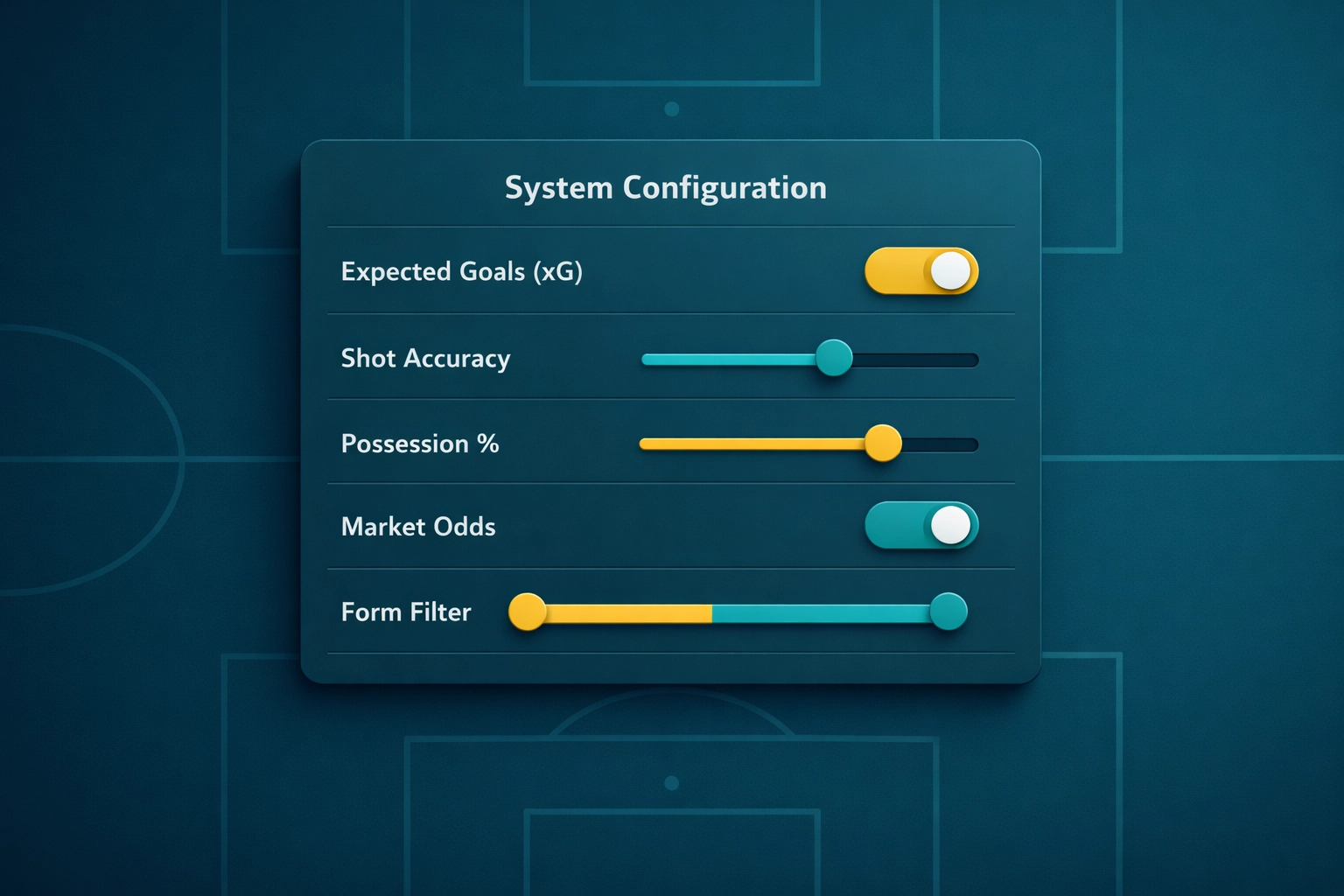
The System Builder allows you to filter through over 350,000 matches across 50+ global leagues instantly. You can set specific parameters such as:
Backtesting is the process of applying your system’s rules to historical data to see how much profit (or loss) it would have generated in the past.
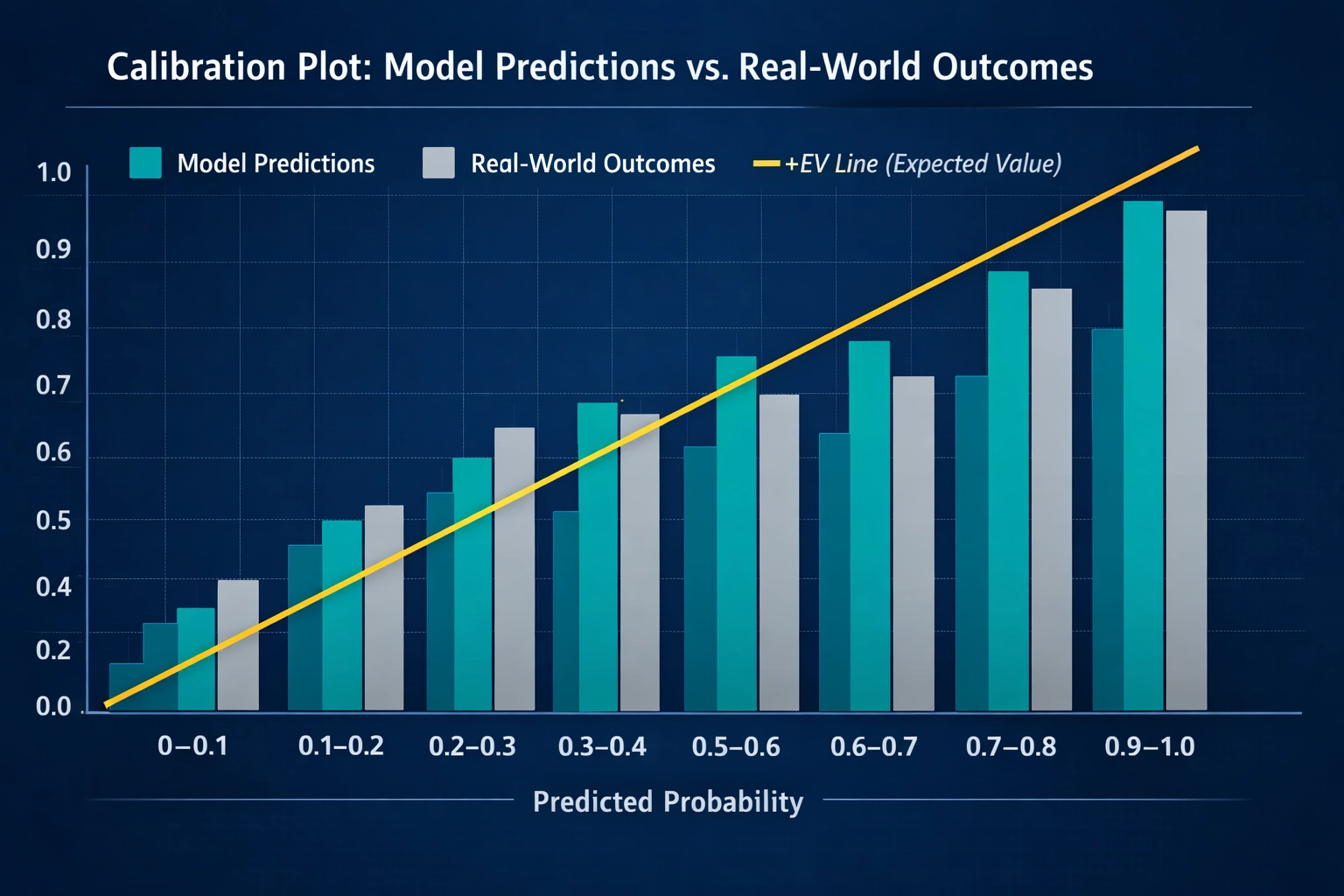
A key metric in backtesting is calibration. If your model predicts a team has a 60% chance of winning, and over 1,000 matches that criteria was met, did that team actually win 60% of the time? If they won 65% of the time, you have found Positive Expected Value (+EV).
Using the Predictology platform, you can run these reports in seconds. If the data shows a negative ROI over five years, you don’t lose any money; you simply refine the hypothesis and try again. This “fail fast” approach is how the world’s most successful syndicates operate.
When you build a betting system, there is a temptation to add more and more filters until the past performance looks perfect. This is called “overfitting.”
For example, if you find that a system only works “when it’s raining on a Tuesday in the Italian Serie B,” you haven’t found a system: you’ve found a coincidence. A robust football betting system should be built on 3-5 core principles that have a logical reason for working. The simpler the system, the more likely it is to hold up in the future.
Even the best profitable betting models will go through losing streaks. This is the nature of probability. To survive these periods, you need a disciplined staking plan.
We recommend starting with a small, manageable bankroll and only increasing your stakes once your system has proven its profitability in “live” conditions for at least 3-6 months.
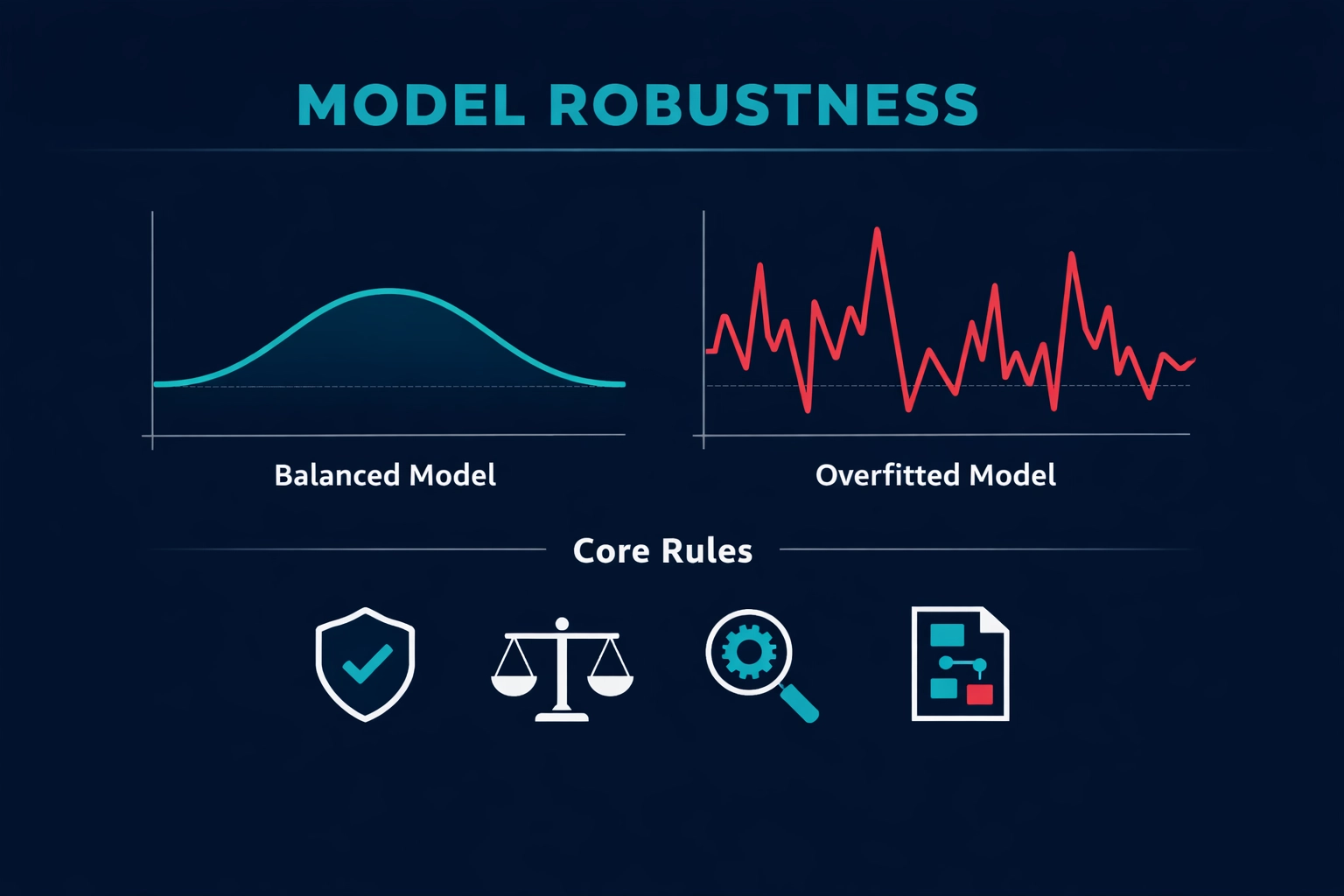
Building a betting system is an iterative process. It requires patience, a skeptical mind, and a commitment to data over emotion. By using the Predictology System Builder, you are giving yourself the same technological advantages used by professional betting syndicates.
The goal isn’t to win every bet. The goal is to consistently place bets where the probability of the outcome is higher than the odds suggest. Over hundreds of matches, the math will always win.
Stop guessing and start analyzing. Access 10+ years of data and our proprietary System Builder today to start creating your own profitable betting models.
Get Started with the Predictology System Builder Here
By following this structured methodology, you move from the ranks of the “punters” into the world of sports analytics. Learn more about our process at our About Us page or dive into more strategies on our blog.
October 17, 2026
How often do half-time leads hold? Win, draw and defeat rates for half-time leaders in 13 leagues so far in...
October 17, 2026
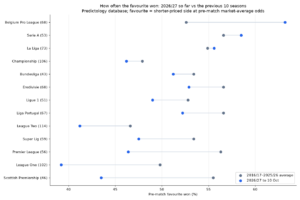
Favourites, draws and goals in 2026/27 so far compared with the previous 10 seasons across 13 leagues, from the Predictology...
October 17, 2026
Expected Goals (xG); many recreational bettors spend their Saturday afternoons fixated on the final whistle. They track full-time results, late...
October 17, 2026
In the world of football betting, 2026 marks a significant turning point. Just a few years ago, Expected Goals (xG)...
October 17, 2026
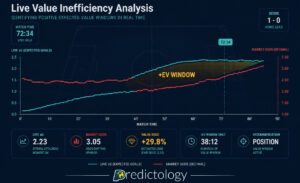
Expected Value (+EV) For the majority of football bettors, the live market is a whirlwind of emotion, reaction, and guesswork....
October 17, 2026
How often do half-time leads hold? Win, draw and defeat rates for half-time leaders in 13 leagues so far in...
October 17, 2026
Favourites, draws and goals in 2026/27 so far compared with the previous 10 seasons across 13 leagues, from the Predictology...
October 17, 2026
Expected Goals (xG); many recreational bettors spend their Saturday afternoons fixated on the final whistle. They track full-time results, late...
October 17, 2026
In the world of football betting, 2026 marks a significant turning point. Just a few years ago, Expected Goals (xG)...
October 17, 2026
Expected Value (+EV) For the majority of football bettors, the live market is a whirlwind of emotion, reaction, and guesswork....
Join the Discussion
We respect your privacy — your email won’t be shown. Fields marked * are required.