October 23, 2026
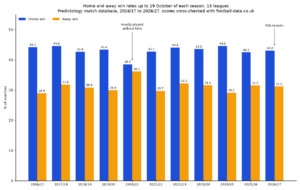
Home Advantage in 2026/27 vs the Last 10 Seasons
How strong is home advantage this season? Home, draw and away win rates in 13 leagues so far in 2026/27,...
Expected Value +EV; most football fans approach betting with a single question: “Who is going to win this match?”
If you want to move from being a recreational bettor to a professional one, you need to stop asking that question immediately. Professional bettors don’t care who wins; they care about the price. They care about the relationship between the probability of an event happening and the odds being offered by the bookmaker.
In the world of sports analytics, this is known as Expected Value (EV). Understanding and mastering +EV is the single most important hurdle you will clear on your journey to becoming a profitable bettor. This guide will break down the concept, the math, and the application of +EV strategy specifically for football markets.
Expected Value is a calculation that tells you how much you can expect to win or lose, on average, if you were to place the same bet on the same odds an infinite number of times.
In betting terms, there are two types of EV:
Think of a coin toss. The “true” probability of heads is 50%. If a friend offers to pay you $1.10 for every $1.00 you bet on heads, you have a +EV bet. Even if you lose the first three tosses, you should keep betting, because over 1,000 tosses, the math dictates you will end up in profit.
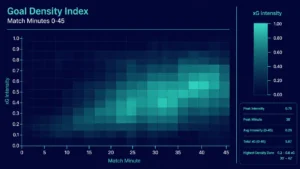
In football, your “coin toss” is more complex. It involves analyzing team form, Expected Goals (xG), injuries, and tactical matchups to determine the real probability of an outcome, rather than just following the bookmaker’s implied probability.

To master +EV betting, you need to get comfortable with a simple formula. Don’t let the word “math” intimidate you; once you grasp this, the entire betting market will look different to you.
The formula for Expected Value is:
EV = (Probability of Winning × Amount Won per Bet) – (Probability of Losing × Amount Lost per Bet)
Let’s look at a Premier League clash between Arsenal and Manchester United.
Suppose the bookmaker is offering odds of 2.00 (Even money) on Arsenal to win. This price implies a 50% probability of an Arsenal victory (1 / 2.00 = 0.50).
However, your data analysis: perhaps using Predictology’s sports analytics tools: suggests that Arsenal actually has a 55% chance of winning this specific matchup due to home advantage and United’s injury list.
If you bet $100 on Arsenal:
EV = (0.55 × $100) – (0.45 × $100) = $55 – $45 = +$10
In this scenario, every time you place this bet, you have an Expected Value of $10. You might lose the bet today, but if you find 1,000 bets with this same value, you are mathematically projected to make $10,000 in profit.
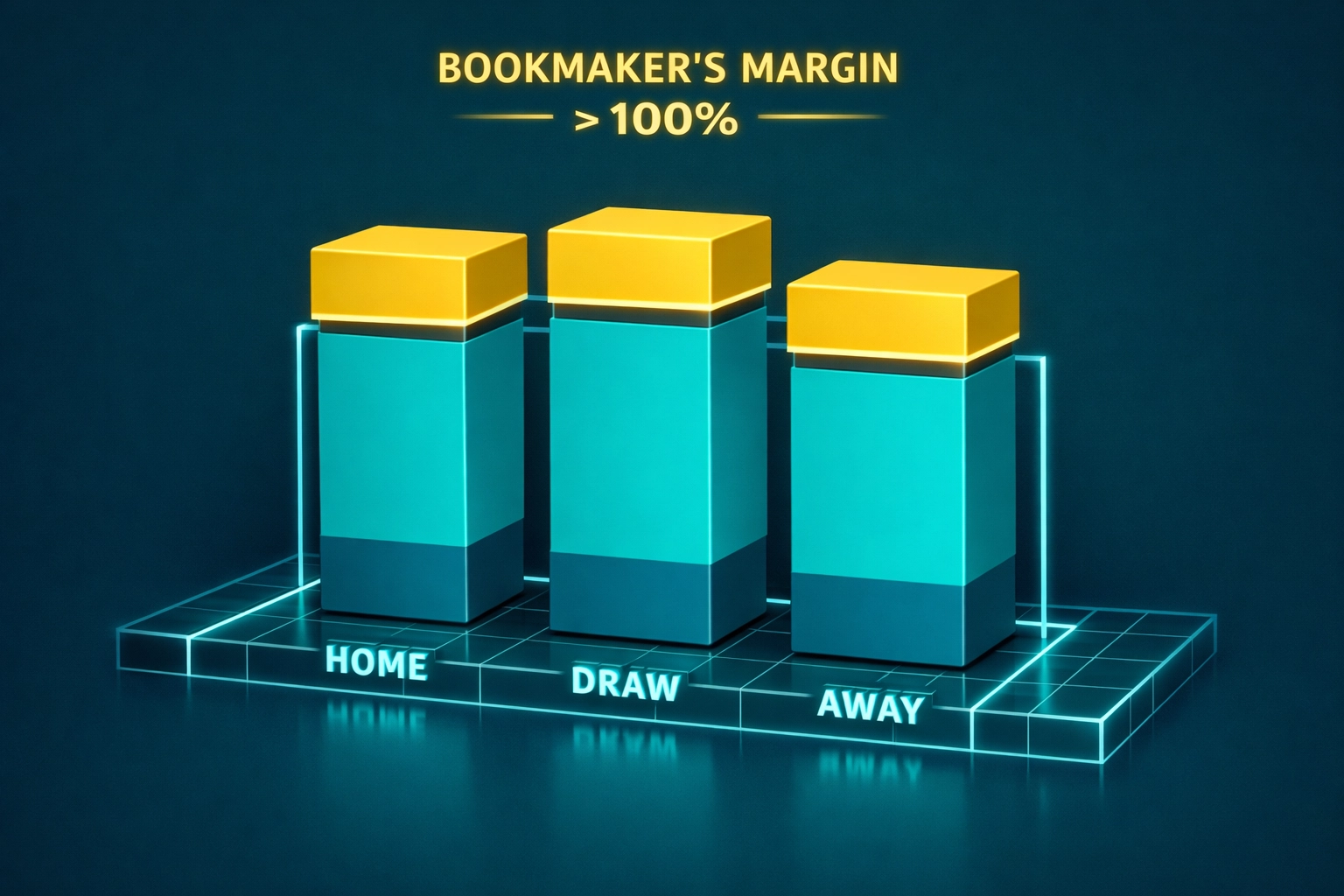
One reason +EV opportunities are hard to find is the “vig” or “overround.” Bookmakers don’t offer fair odds; they bake a commission into the prices.
If you look at a standard Match Odds (1X2) market, the implied probabilities of Home Win, Draw, and Away Win will usually add up to 105% or 107%, rather than 100%. That extra 5-7% is the bookie’s margin.
To beat the bookmaker, your analysis must be accurate enough to not only find the right side of the probability but to overcome that built-in margin. This is why using the simple trick to improve your football betting systems is essential for beginners who are still refining their edge.
Identifying +EV isn’t about “guessing” who is better. It’s about building a systematic approach to finding price discrepancies. Here is how pros do it:
Pros use statistical models to generate their own “fair prices” for every game. By looking at historical data, xG (Expected Goals), and squad depth, they assign a percentage to each outcome. If their model says a team should be 1.80 and the bookie is offering 2.10, they have found +EV.
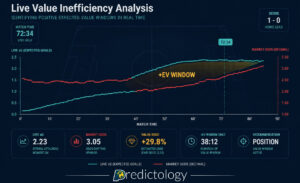
The betting market is like a stock market. Odds fluctuate based on news, weather, and where the “smart money” is going. Understanding why a line is moving can help you spot when a bookmaker has overcorrected, creating a value opportunity on the other side.
Major markets like the Premier League are highly efficient because bookmakers have the most data and the highest volume of bets. Beginners often find more +EV opportunities in secondary leagues (like the Championship or Eredivisie) or niche markets like Player Props and Corner counts, where the bookie’s models might not be as sharp.
This is the part where many beginners quit. You can find a perfect +EV bet, have a massive edge over the bookmaker, and still lose the bet. In fact, you can lose five or ten in a row.
This is called variance.
If you flip a coin with a 60% bias for heads, it is still possible to get tails five times in a row. In football, a red card in the 5th minute or a deflected goal can ruin a perfectly calculated +EV bet.
Professional bettors focus on the process, not the individual result. If you consistently place bets with a 5% edge, the law of large numbers ensures that your bankroll will grow over hundreds of bets. If you get emotional after a “bad beat” and deviate from your +EV strategy, you’ve already lost.
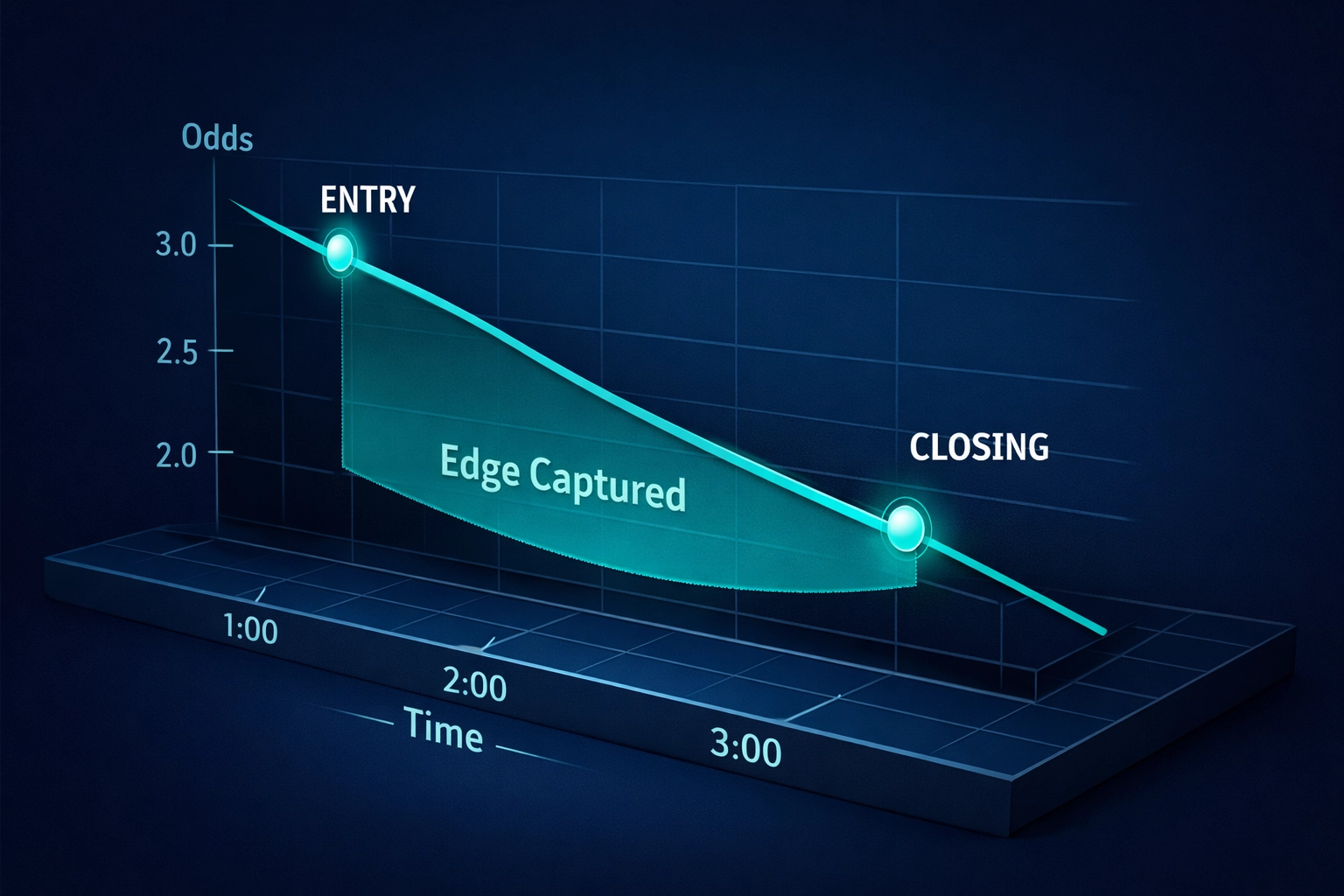
One of the most reliable ways to know if you are a +EV bettor is to check your Closing Line Value (CLV). The “Closing Line” is the final price offered by the bookmaker before a match kicks off.
Because the closing line represents the most efficient point of the market (incorporating all available information and betting volume), beating it is the ultimate goal. If you bet on a team at 2.10 and they close at 1.90, you have secured +EV.
For a deeper dive into this, check out The Ultimate Guide to EV Betting: How to Build a Betting System That Beats the Closing Line.
If you want to start applying this strategy, follow these steps:
Mastering +EV is a marathon, not a sprint. It requires a shift from being a fan of a team to being a fan of numbers. Once you start seeing football matches as a series of probabilities and prices, you are no longer gambling: you are investing.
Ready to start building your own +EV models? Explore our Insights and Tutorials to see how data can give you the edge over the bookmaker.
October 23, 2026
How strong is home advantage this season? Home, draw and away win rates in 13 leagues so far in 2026/27,...
October 23, 2026
How often do half-time leads hold? Win, draw and defeat rates for half-time leaders in 13 leagues so far in...
October 23, 2026
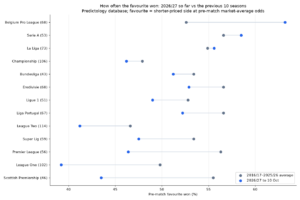
Favourites, draws and goals in 2026/27 so far compared with the previous 10 seasons across 13 leagues, from the Predictology...
October 23, 2026
Expected Goals (xG); many recreational bettors spend their Saturday afternoons fixated on the final whistle. They track full-time results, late...
October 23, 2026
In the world of football betting, 2026 marks a significant turning point. Just a few years ago, Expected Goals (xG)...
October 23, 2026
How strong is home advantage this season? Home, draw and away win rates in 13 leagues so far in 2026/27,...
October 23, 2026
How often do half-time leads hold? Win, draw and defeat rates for half-time leaders in 13 leagues so far in...
October 23, 2026
Favourites, draws and goals in 2026/27 so far compared with the previous 10 seasons across 13 leagues, from the Predictology...
October 23, 2026
Expected Goals (xG); many recreational bettors spend their Saturday afternoons fixated on the final whistle. They track full-time results, late...
October 23, 2026
In the world of football betting, 2026 marks a significant turning point. Just a few years ago, Expected Goals (xG)...
Join the Discussion
We respect your privacy — your email won’t be shown. Fields marked * are required.