April 05, 2026
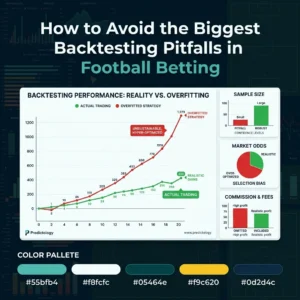
How to Avoid the Biggest Backtesting Pitfalls in Football Betting
Backtesting; in the modern era of sports trading, data is the foundation of any successful venture. If you want to...
Profitable Betting Models; let’s be honest: we’ve all been there. It’s Saturday afternoon, you’re looking at the fixture list, and you see a match-up that just feels right. Maybe it’s a top-four team playing a struggling side away from home, or a striker who is “due” a goal. You place the bet because your gut […]
Profitable Betting Models; let’s be honest: we’ve all been there. It’s Saturday afternoon, you’re looking at the fixture list, and you see a match-up that just feels right. Maybe it’s a top-four team playing a struggling side away from home, or a striker who is “due” a goal. You place the bet because your gut tells you it’s a lock.
Then, the underdog parks the bus, the striker hits the post twice, and you’re left wondering how a “sure thing” went so wrong.
The truth is, the human brain is hardwired for storytelling, not statistics. We love a good narrative, but the bookies love it even more: because narratives are exactly what they use to price their markets and take your money. If you want to move from being a casual punter to a profitable bettor, you need to kill the “gut feeling” and embrace the cold, hard logic of data-driven models.
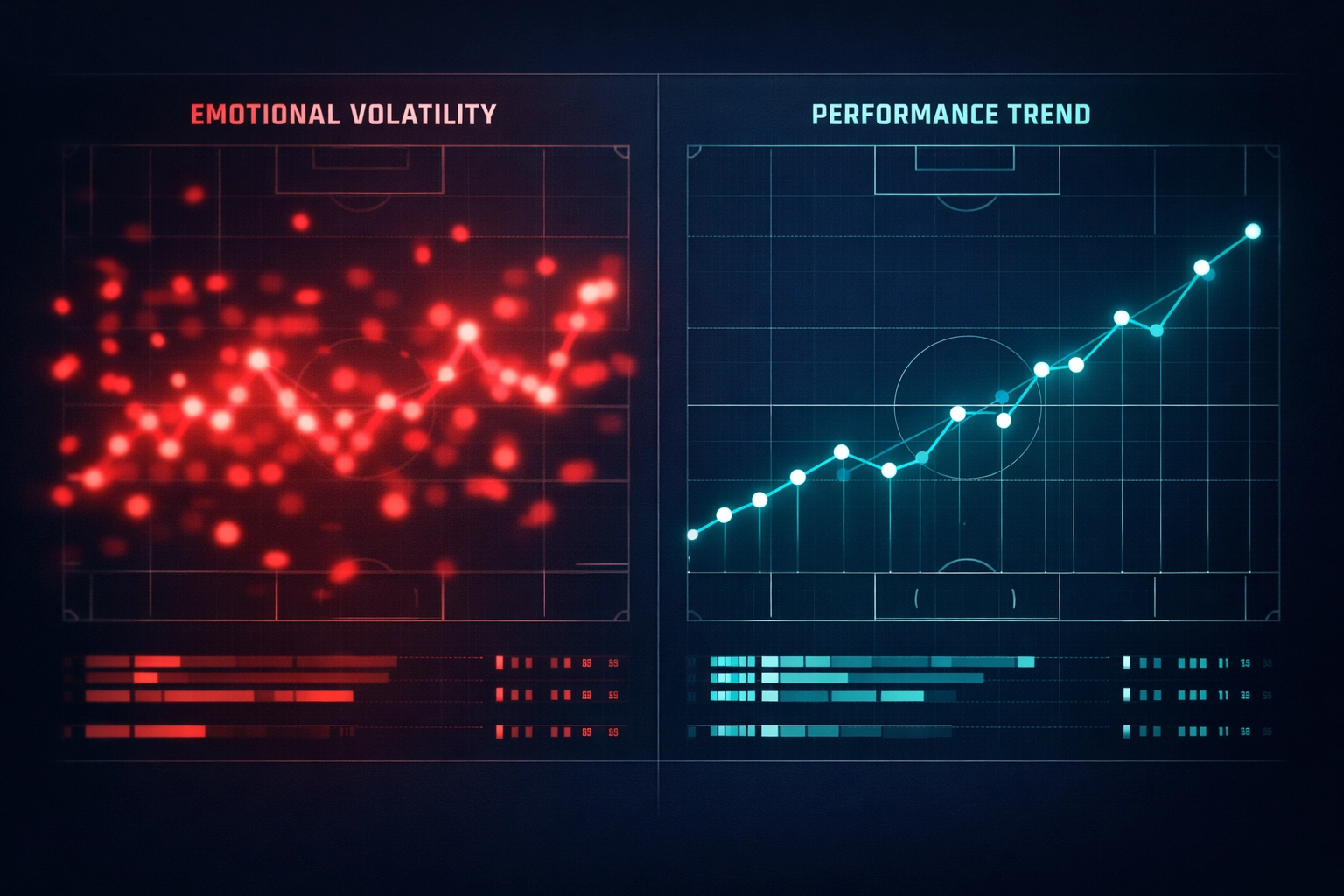
The biggest hurdle for most bettors isn’t a lack of sports knowledge; it’s a psychological one. Most people approach betting by asking: “Who is going to win this game?”
Professional bettors ask a completely different question: “Is the probability of this outcome higher than the odds suggest?”
This is the shift from “picking winners” to finding Expected Value (EV). When you bet based on your gut, you are susceptible to cognitive biases. You might remember a team’s brilliant performance from three weeks ago (recency bias) or ignore a key injury because you want your favorite team to win (confirmation bias).
Data-driven models don’t have feelings. They don’t care about “momentum” unless it’s quantifiable. They don’t care about the “magic of the cup.” They only care about the numbers. By using a systematic approach to football betting, you remove the emotional volatility that leads to poor bankroll management and “chasing” losses.
If you want to beat the bookies, you have to understand the math they use against you. Every set of odds offered by a bookmaker represents an implied probability. For example, decimal odds of 2.00 imply a 50% chance of an event happening (1 / 2.00 = 0.50).
However, the bookie adds a “margin” or “overround,” meaning the total probability of all outcomes adds up to more than 100%. This is their built-in edge.
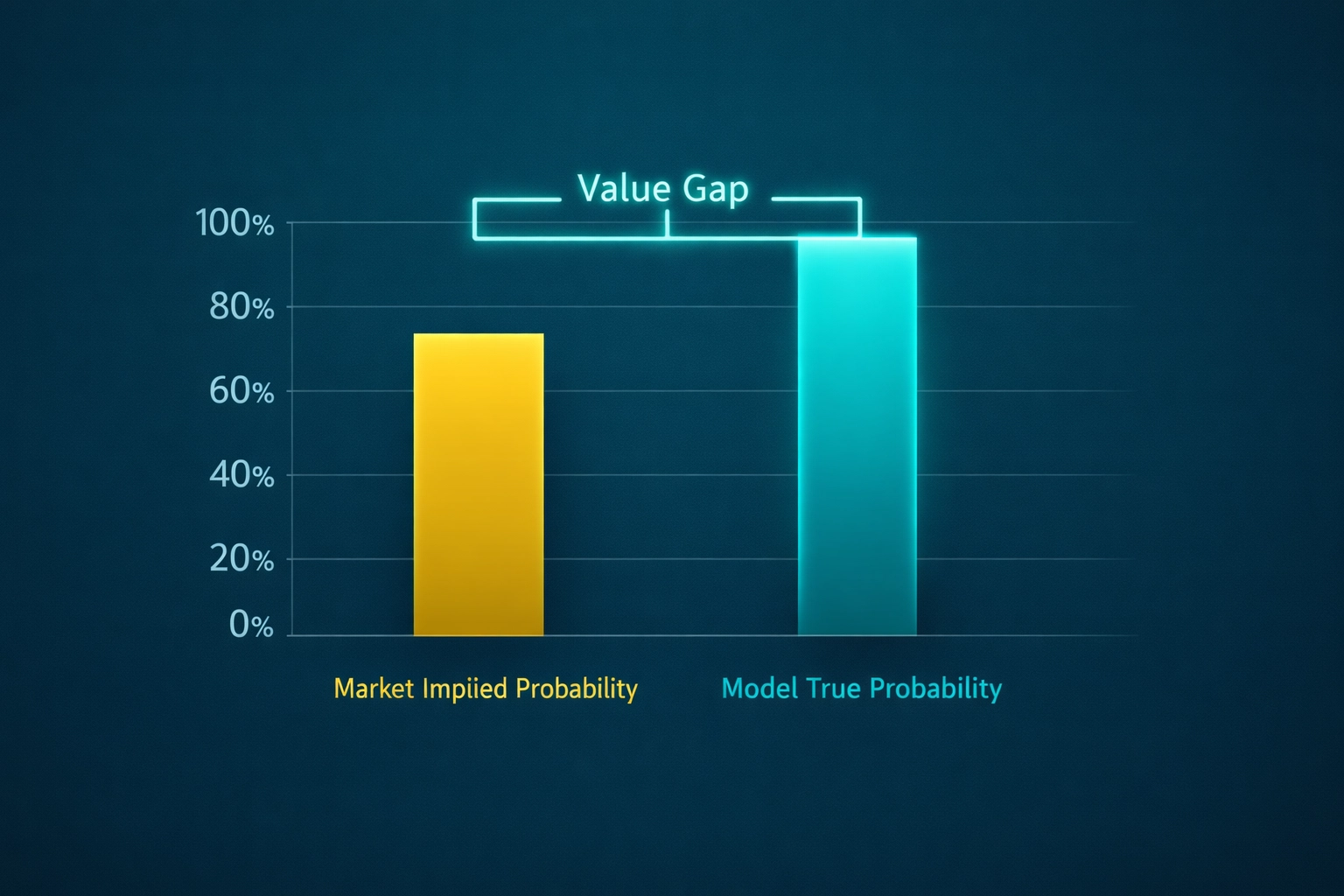
To beat them, your model must identify positive Expected Value (+EV). This occurs when your calculated probability is higher than the bookmaker’s implied probability.
Let’s say a bookie offers odds of 2.10 for a home win, implying a 47.6% probability. After running your data through the Predictology System Builder, your model determines the “true” probability is actually 55%.
In the short term, that home team might still lose. But if you place 1,000 bets with a 7.4% edge, the math dictates that you will be profitable. This is exactly how casinos operate, and it’s how you should operate your betting “business.” For a deeper dive, check out our guide on the maths of winning and understanding EV.
Why can a machine beat a seasoned football analyst? Because the volume of data required to accurately price a football match is far beyond human processing power. Modern AI football betting models consider hundreds of variables simultaneously:
While a human might notice a team is playing well, a model can tell you exactly how much better they are performing relative to their league average. This allows you to find value bets in leagues you’ve never even watched.
The betting market is not static; it is an evolving ecosystem. Bookmakers are constantly adjusting their algorithms to counter successful bettors. This is why traditional, static “systems” often fail after a few months: the market “learns” them.
Data-driven strategies at Predictology utilize machine learning and real-time data feeds. These models don’t just look at what happened in 2018; they are constantly refining their accuracy based on the most recent matches.
Bookies are very good at pricing the Premier League or the Champions League because the sheer volume of data and public interest makes the market “efficient.” However, in secondary leagues or niche markets, inefficiencies exist.
A data-driven model can scan dozens of leagues across the globe simultaneously, finding automated football betting opportunities in the 2nd division of Iceland or the Brazilian Serie B that a human analyst would completely miss. By the time the general public notices a trend, the value is usually gone. A model catches it before the odds drop.
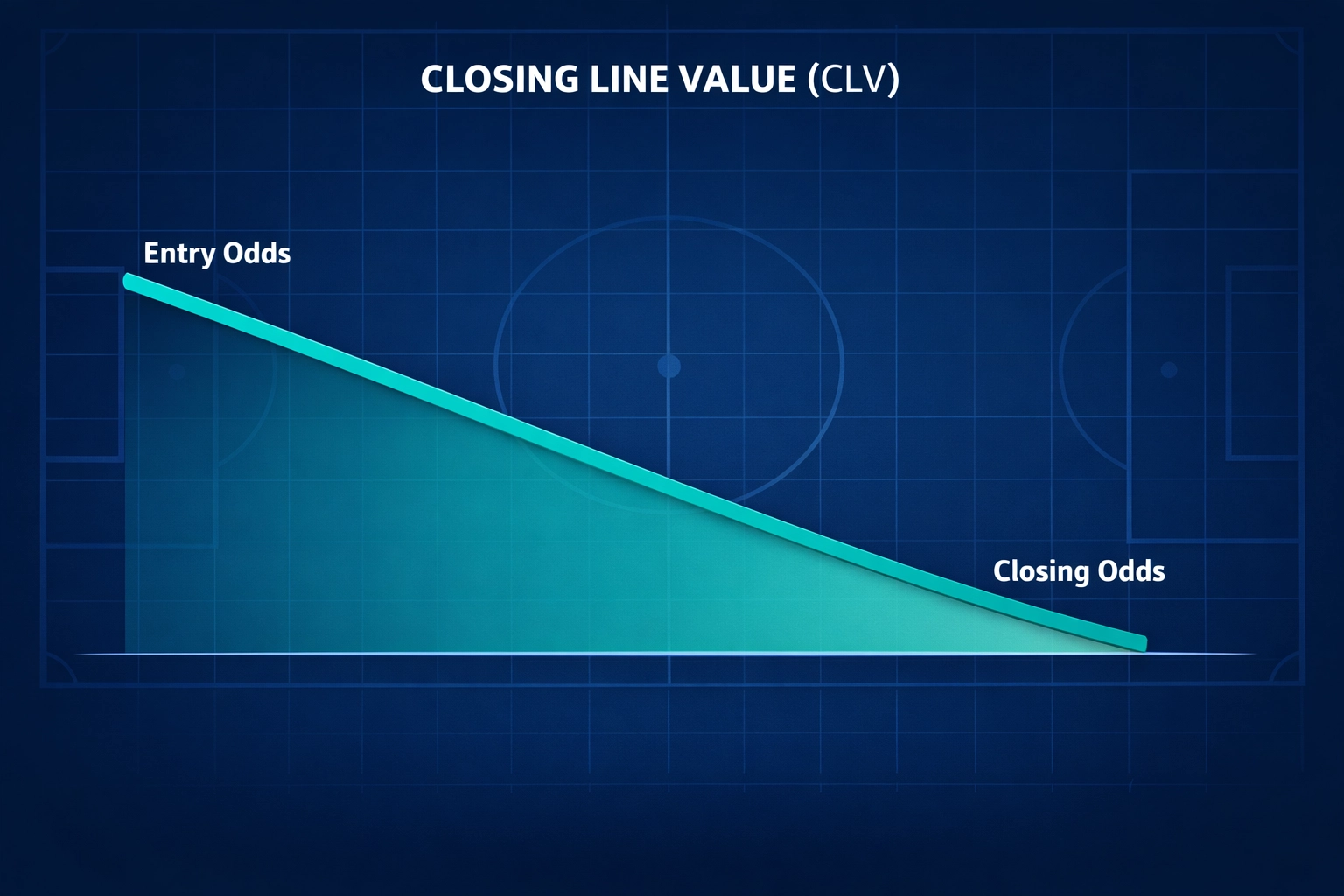
If you want to know if your strategy is actually good: or if you’ve just been lucky: you need to look at Closing Line Value (CLV).
The “Closing Line” is the final set of odds offered by the bookmaker before the match kicks off. Because the market has had hours or days to absorb all available information (injuries, weather, line-ups, betting volume), the closing line is widely considered the most accurate representation of the “true” probability.
If you consistently beat the closing line, you are a winning bettor. Period.
Even if Team A loses that specific game, you have made a mathematically sound decision. Over time, consistently getting better odds than the market eventually settles on is the guaranteed path to long-term profit. Data-driven models are designed specifically to identify these early value entries.
Transitioning to a data-driven approach doesn’t mean you need to be a computer programmer. It means using the right tools to do the heavy lifting for you.
At Predictology, we’ve built the technology so you can focus on the strategy. Whether you are looking at xG analysis to find undervalued strikers or using our System Builder to test a hypothesis across 10 years of historical data, the goal is the same: Replace guesswork with evidence.
The bookies want you to bet with your heart. They want you to follow the hype, the social media “tips,” and your own biases. They win when you treat betting as a game of luck.
When you treat it as a game of probability and data, you flip the script. You stop being a “punter” and start being the “house.” By utilizing Predictology tools, you gain access to the same level of analytics used by professional syndicates, allowing you to find value, exploit inefficiencies, and build a sustainable, profitable betting portfolio.
Ready to ditch the gut feeling? Start building your first data-driven model today and see the difference that objective analysis makes to your bottom line.
April 05, 2026
Backtesting; in the modern era of sports trading, data is the foundation of any successful venture. If you want to...
April 05, 2026
Betting Automation; if you’ve spent any time in the world of professional betting, you know that the biggest enemy isn’t...
April 05, 2026
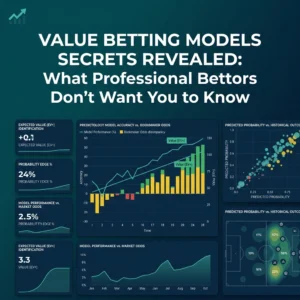
Value Betting Models; if you’ve spent any time in the sports betting world, you’ve likely heard the term “value” thrown...
April 05, 2026
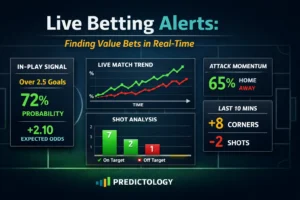
Live Betting Alerts; in the modern sports trading landscape, the pre-match markets are more efficient than ever. With thousands of...
April 05, 2026
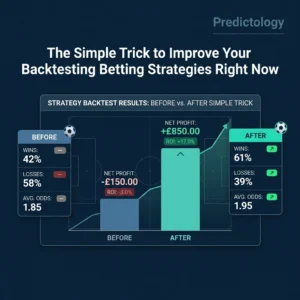
Backtesting Betting Strategies; we’ve all been there. You spend hours, maybe even days, scouring through historical football data. You’re looking...
April 05, 2026
Backtesting; in the modern era of sports trading, data is the foundation of any successful venture. If you want to...
April 05, 2026
Betting Automation; if you’ve spent any time in the world of professional betting, you know that the biggest enemy isn’t...
April 05, 2026
Value Betting Models; if you’ve spent any time in the sports betting world, you’ve likely heard the term “value” thrown...
April 05, 2026
Live Betting Alerts; in the modern sports trading landscape, the pre-match markets are more efficient than ever. With thousands of...
April 05, 2026
Backtesting Betting Strategies; we’ve all been there. You spend hours, maybe even days, scouring through historical football data. You’re looking...
Join the Discussion
We respect your privacy — your email won’t be shown. Fields marked * are required.