May 25, 2026
The Professional’s Toolkit: Essential Analytics for the Serious Bettor
Analytics; to move from a casual punter to a professional bettor, you must transition from making “picks” to executing a...
Backtesting; in the modern era of sports trading, data is the foundation of any successful venture. If you want to build a betting system that survives the volatility of a full season, you cannot rely on gut feeling or recent highlights. You need evidence. This is where backtesting comes in, the process of applying your betting rules to historical data to see how they would have performed in the past.
However, backtesting is a double-edged sword. Done correctly, it provides a roadmap to long-term profitability. Done poorly, it creates a “paper tiger”, a strategy that looks invincible on a spreadsheet but collapses the moment you put real money behind it.
To help you navigate this, we’ve outlined the most common pitfalls when backtesting betting strategies and how you can avoid them to ensure your models are robust, reliable, and ready for the market.
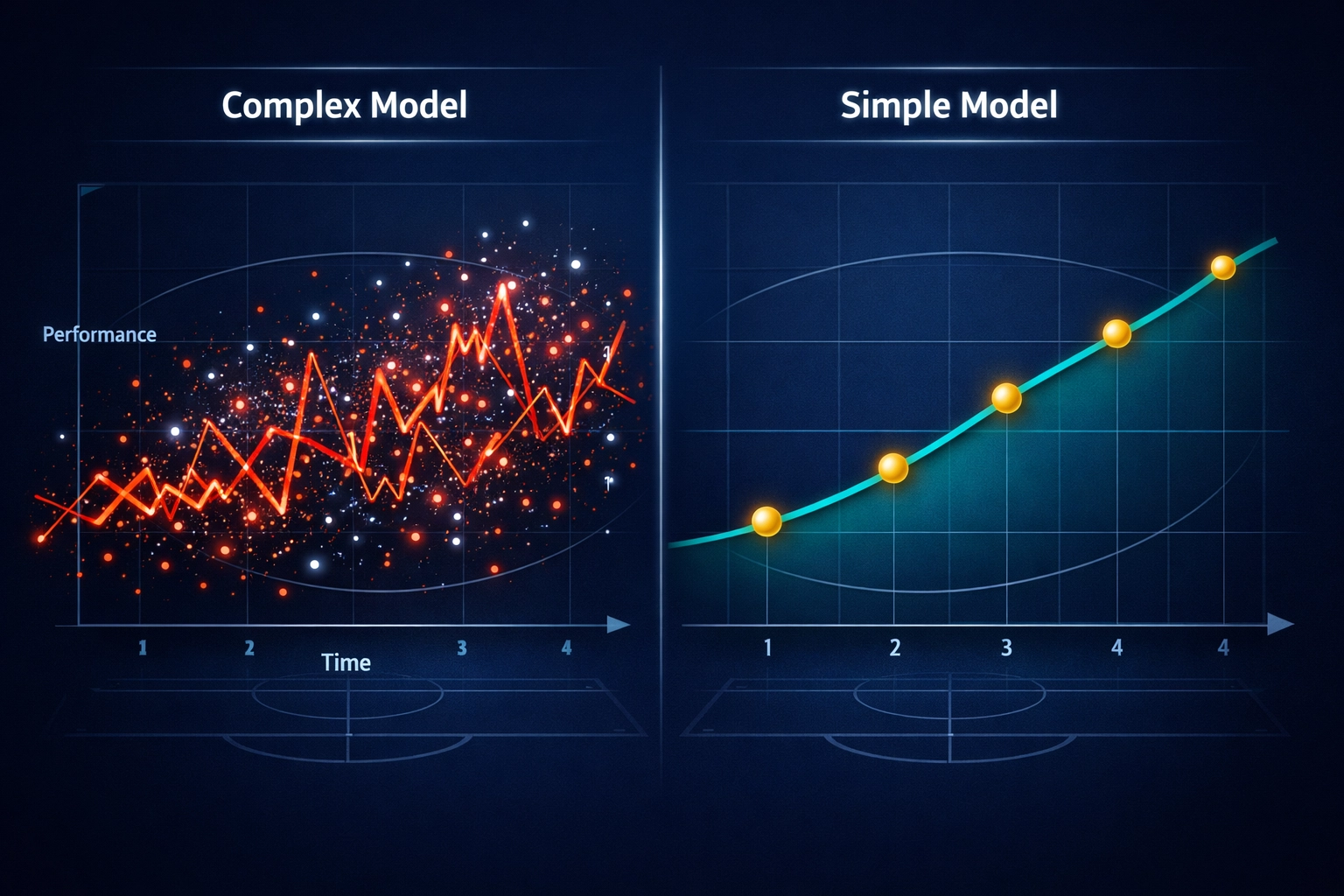
Overfitting is perhaps the most frequent mistake made by those looking to build a betting system. It occurs when a model is so closely tailored to a specific set of historical data that it begins to treat random noise as if it were a meaningful pattern.
Imagine you are looking at home wins in the English Premier League. You notice that a specific team won every time it rained on a Tuesday when their star striker wore blue boots. If you add these as “filters” to your strategy, your backtest will show a 100% win rate. But does the color of the boots actually have predictive power? Of course not.
To avoid overfitting, follow the rule of parsimony. A robust system should typically rely on 3 to 5 core variables maximum. If your strategy requires 12 different conditions to trigger a bet, you are likely just “curve-fitting” to past coincidences.
When using the Predictology System Builder, focus on fundamental drivers of performance, such as xG analysis or long-term shot data, rather than hyper-specific situational filters that may never repeat.
Variance is the constant companion of every football bettor. In the short term, anything can happen. A poor strategy can have a winning streak of 10 games, and a world-class model can endure a 15-game losing run.
A common pitfall is concluding that a strategy works after testing it on just one season or a few hundred matches. If your backtest shows a 25% ROI over 50 games, that figure is statistically meaningless. It is likely the result of a “hot run” rather than a sustainable edge.
For a football betting system to be considered “validated,” you should aim for a sample size of at least 1,000 to 5,000 bets across multiple seasons. This breadth of data helps smooth out the impact of luck and reveals the true mathematical expectancy of your approach.
Professional systems typically target a consistent ROI of 3% to 8%. If your backtest is showing a 20% or 30% ROI over a large sample, you should actually be suspicious. It usually indicates that you have either overfitted the data or are using information that wouldn’t have been available at the time of the bet.
If you test enough random variables against a dataset, you will eventually find something that looks like a winning strategy purely by chance. This is known as multiple testing bias or “data dredging.”
If you run 100 different backtests with random parameters, at least five of them will likely show “profitable” results simply due to the laws of probability. If you then pick the best-performing one and start betting, you aren’t following a system; you are following a fluke.
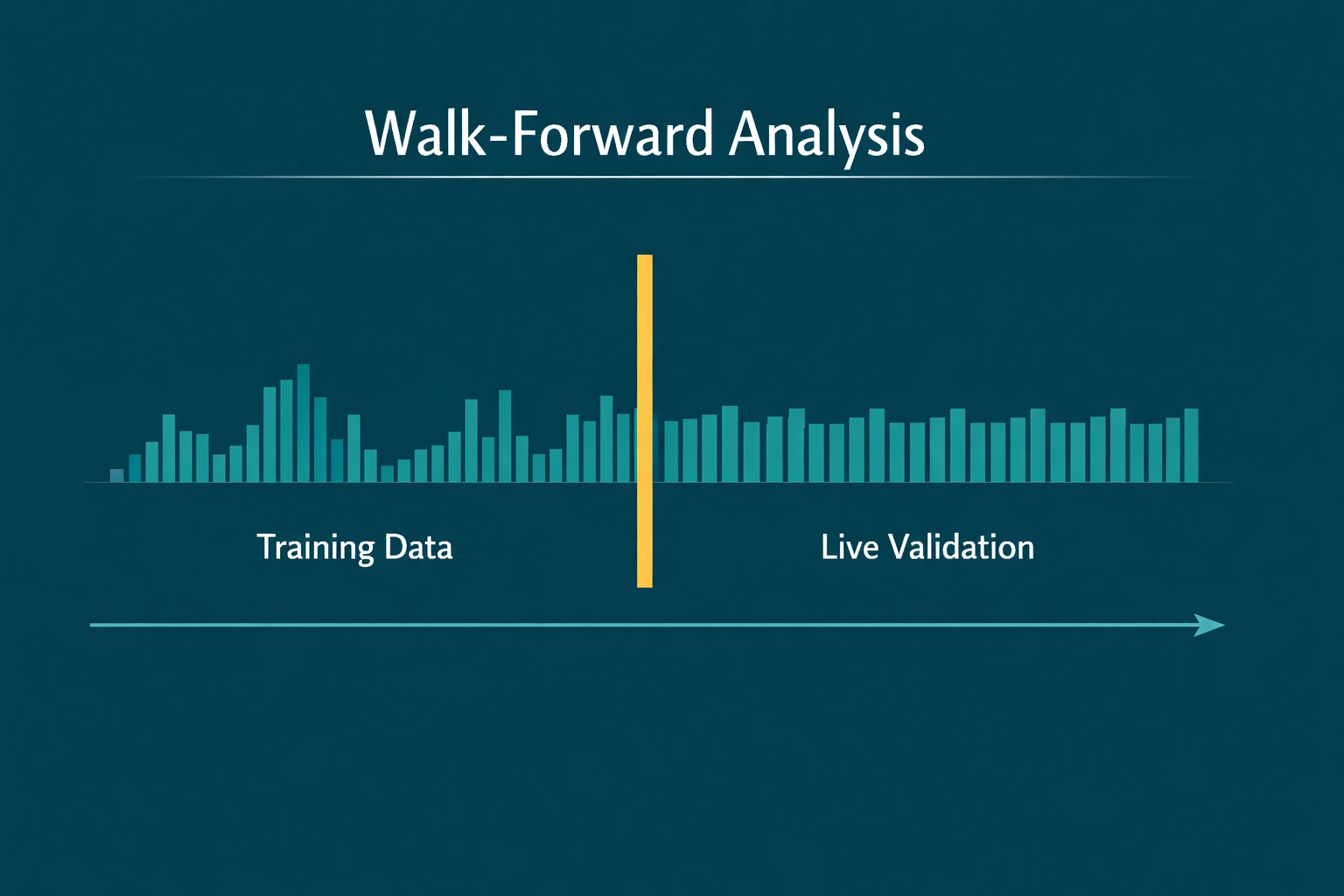
The best way to combat this is through out-of-sample testing. Divide your data into two sets: a “training” set (e.g., seasons 2018-2022) and a “test” set (e.g., season 2023-2024).
Build your strategy using the training set. Once you think you have a winner, run it against the test set, data the model has never “seen” before. If the performance holds up, you likely have a genuine edge. If the profitability vanishes, your original results were likely just statistical noise.
A backtest is a laboratory environment. Live betting is the wild west. Many bettors fail because they assume they can achieve the exact prices used in their backtests.
There are three main “frictions” that can turn a profitable backtest into a losing live system:
When backtesting betting strategies, always include a buffer for these costs. If a strategy only produces a 1% ROI before commissions, it is a losing strategy in practice. For more on how professionals handle these nuances, check out our guide on value betting models secrets revealed.
Look-ahead bias occurs when your backtest accidentally uses information that was not available at the time the bet would have been placed.
A classic example is creating a strategy that bets on a team to win based on their “final league position” or “total goals scored in the season.” While this data is available in your historical database, it wasn’t available in October when the match was played.
Another common form of this bias is using “Closing Odds” to determine whether a bet should be placed, even if the strategy is designed to trigger four hours before kick-off.
Your simulation must strictly follow the chronological flow of information. Ask yourself: “At 10:00 AM on Saturday, did I know the team lineups? Did I know the final xG for this game?” If the answer is no, that data cannot be part of your trigger. Using predictive AI models helps solve this by focusing on rolling averages and pre-match metrics.

The final pitfall is the transition from the spreadsheet to the sportsbook. Even a perfectly conducted backtest cannot account for “Black Swan” events or sudden shifts in market dynamics.
A strategy might have worked perfectly for five years because the market undervalued expected goals (xG). However, as more bettors use xG tools, the market becomes more efficient, and that specific edge may shrink.
Before committing significant capital, we recommend a period of “Forward Testing” or paper trading. Place “virtual” bets on upcoming matches for a month or two to see if the live results mirror the backtest.
Once you are confident, the next logical step is to remove human emotion and error through automation. Integrating your proven strategies with tools like Predictology and BF Bot Manager allows you to execute your edge 24/7 without the risk of “manual override” during a losing streak.
To ensure you are building a betting system that stands the test of time, run your strategy through this final checklist:
Backtesting is not about finding a “get rich quick” button. It is a rigorous scientific process designed to filter out the noise and leave you with a genuine mathematical advantage. By avoiding these six pitfalls, you put yourself leagues ahead of the average bettor and on the path to becoming a professional sports trader.
Ready to start building? Explore our latest football betting systems and use the Predictology toolset to validate your next big idea.
May 25, 2026
Analytics; to move from a casual punter to a professional bettor, you must transition from making “picks” to executing a...
May 25, 2026
Most casual bettors approach the ‘Both Teams to Score‘ (BTTS) market with a simple “they both score a lot of...
May 25, 2026
Automated Football Betting; most football bettors follow a familiar, exhausting cycle. You spend hours analyzing form guides, checking injury reports,...
May 25, 2026
For many football punters, the transition from traditional betting to in-play football trading on the Betfair Exchange is a major...
May 25, 2026
For a long time, Expected Goals (xG) was the “holy grail” for football bettors. It allowed us to see past...
May 25, 2026
Analytics; to move from a casual punter to a professional bettor, you must transition from making “picks” to executing a...
May 25, 2026
Most casual bettors approach the ‘Both Teams to Score‘ (BTTS) market with a simple “they both score a lot of...
May 25, 2026
Automated Football Betting; most football bettors follow a familiar, exhausting cycle. You spend hours analyzing form guides, checking injury reports,...
May 25, 2026
For many football punters, the transition from traditional betting to in-play football trading on the Betfair Exchange is a major...
May 25, 2026
For a long time, Expected Goals (xG) was the “holy grail” for football bettors. It allowed us to see past...
Join the Discussion
We respect your privacy — your email won’t be shown. Fields marked * are required.