August 24, 2026
Beyond the Full-Time Result: Profiting from 1st Half Goals and xG Trends
Expected Goals (xG); many recreational bettors spend their Saturday afternoons fixated on the final whistle. They track full-time results, late...
The introduction of Video Assistant Referees (VAR) has been the most significant structural change to football in the modern era. While fans debate its impact on the “soul” of the game, professional bettors and analysts view it through a different lens: market efficiency, price discovery, and volatility. Since its integration into major European leagues and international tournaments, VAR has fundamentally altered the statistical landscape of the sport, rendering many historical datasets obsolete and creating new, high-value opportunities for those who know where to look.
At Predictology, we have spent the last few years tracking how VAR interventions correlate with market movements. What we’ve discovered is that the betting markets often overreact: or, conversely, fail to react quickly enough: to the unique friction VAR introduces into a match. For the analytically-minded bettor, this friction isn’t a nuisance; it’s an edge. Understanding the mechanics of VAR is no longer optional; it is a core requirement for anyone looking to build a profitable football betting model.
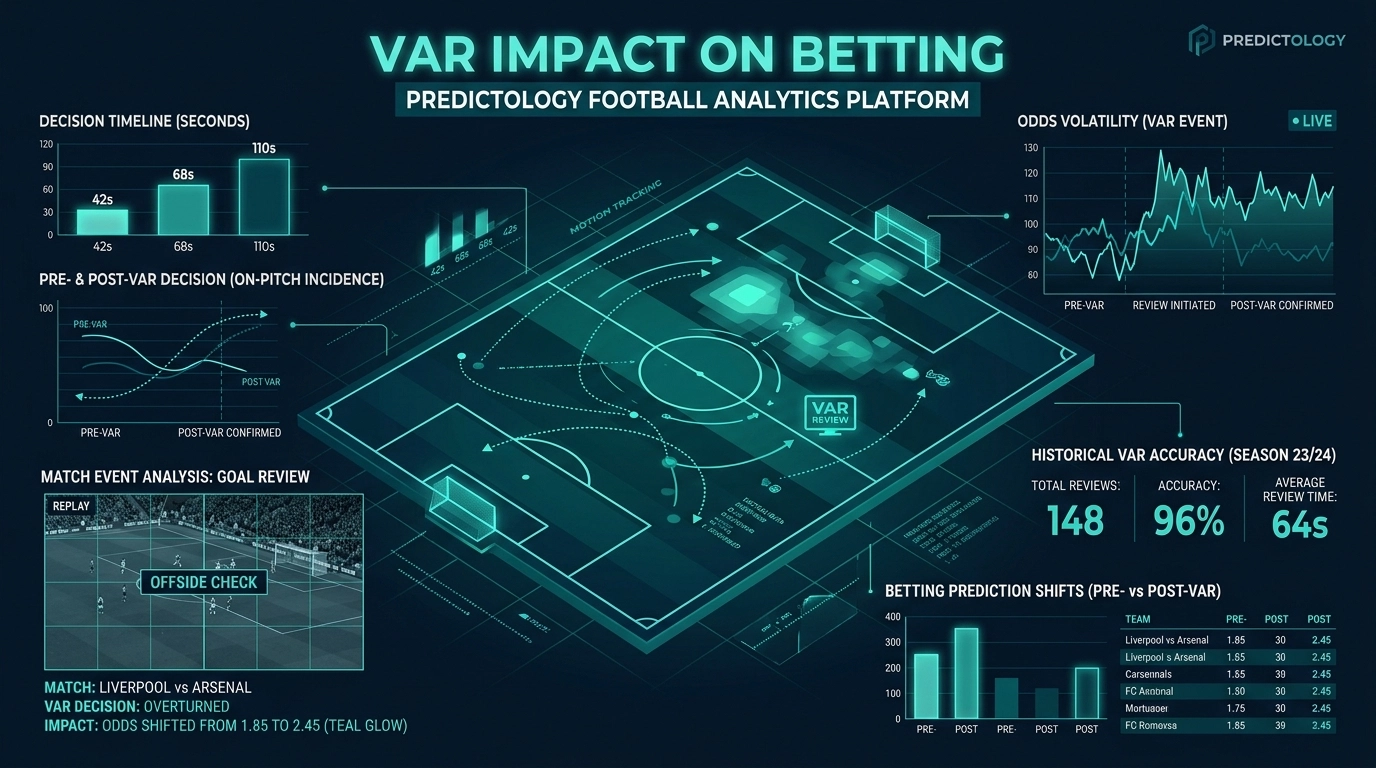
Before VAR, a goal was a definitive event. The ball hit the net, the whistle blew, and the market settled. In the modern era, a goal is merely a “proposed event” until the VAR check is complete. This delay has introduced a period of extreme uncertainty that bookmakers and betting exchanges struggle to price accurately in real-time.
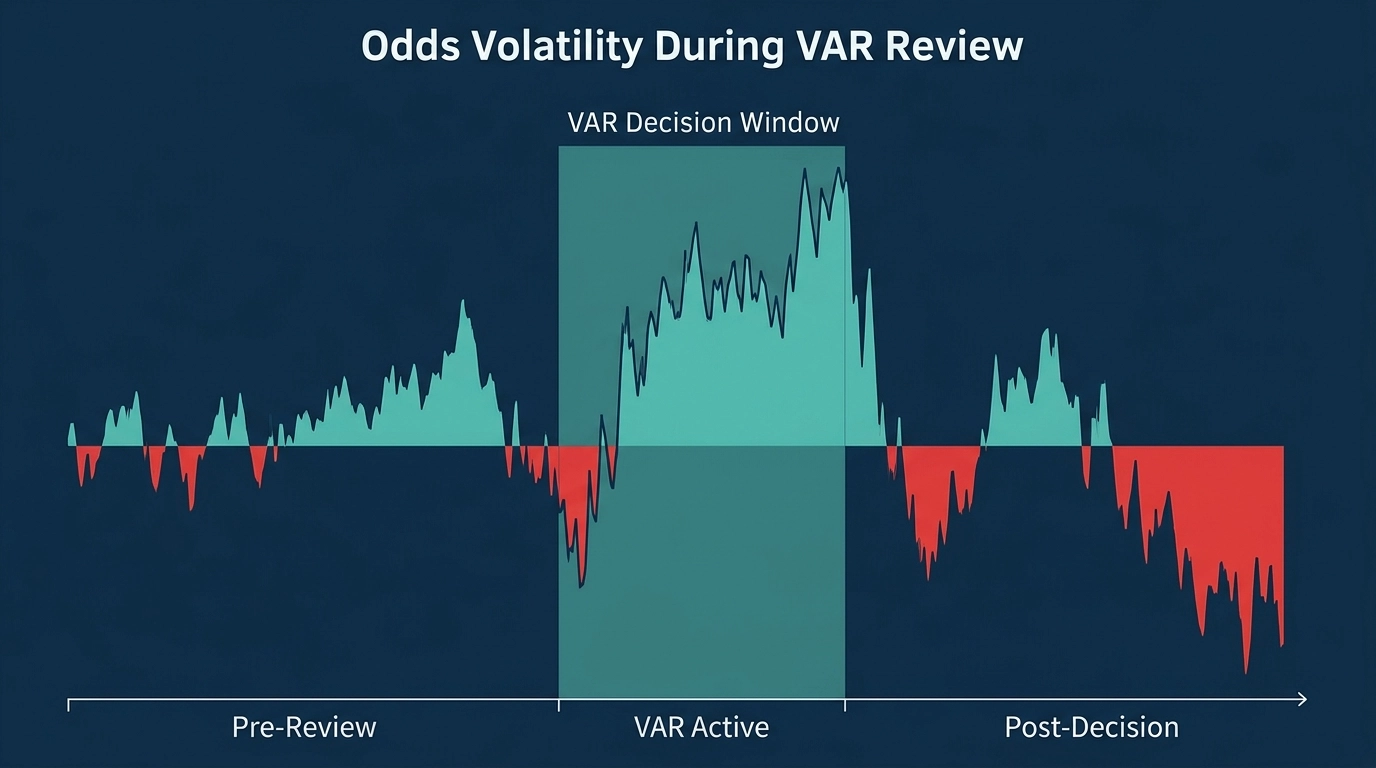
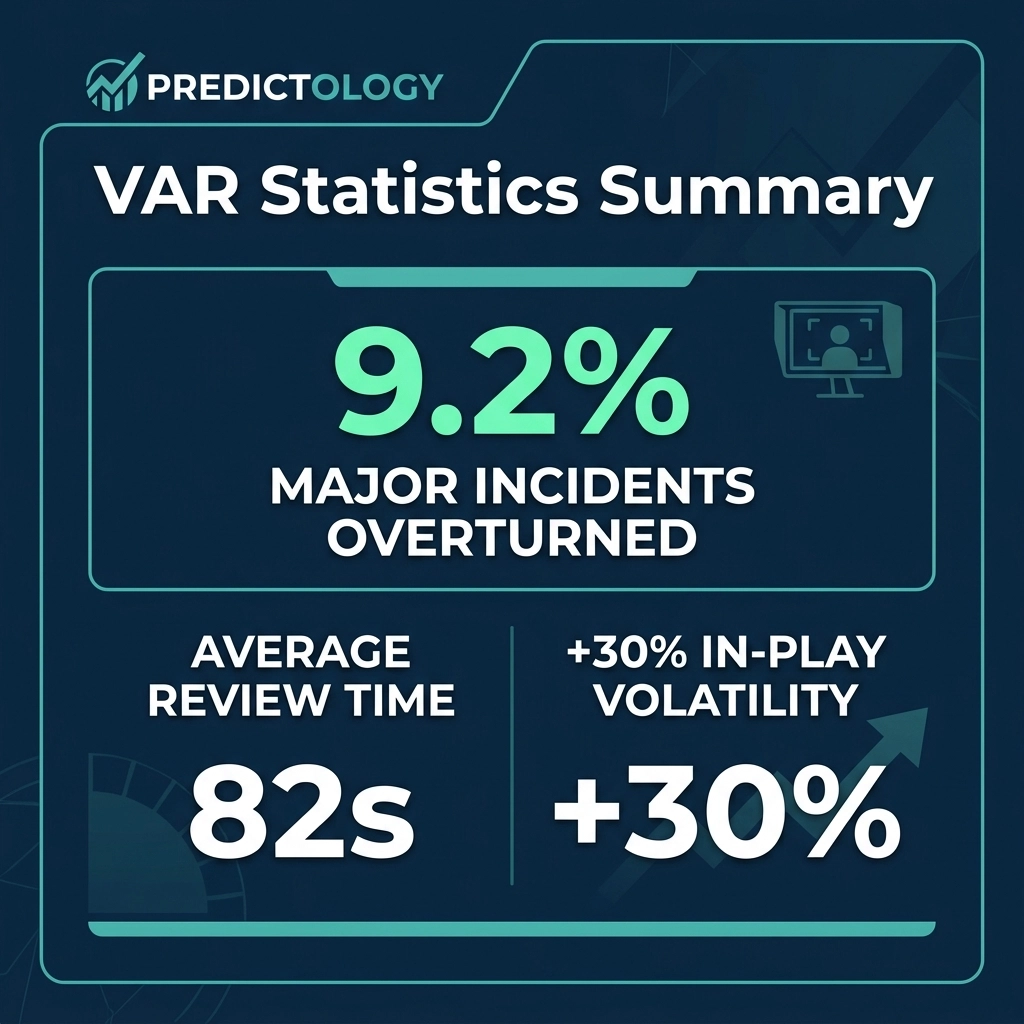
Data suggests that odds volatility during a VAR review is approximately 30% higher than in any other phase of play. During the 60 to 120 seconds it takes for a referee to consult the monitor or wait for a signal from Stockley Park, the “Live” market often remains open but is highly sensitive to visual cues from the broadcast.
Bettors who rely on slow television feeds are at a distinct disadvantage. However, those using real-time data feeds can identify moments where the market has “priced in” a goal reversal before the official decision is announced. This creates a window of +EV (Expected Value) opportunity. If the market prices a reversal at 50/50, but your analysis of the incident (using tools like Live xG indicators) suggests an 80% chance of the goal standing, the value is immense.
One of the most profitable shifts we’ve seen is the “Wait and See” premium. Bookmakers, fearing the “long tail” risk of a late-game VAR reversal, have widened their margins (overrounds) during periods of high VAR probability. For the patient bettor, this means that the pre-match odds on high-intervention events: like penalties or red cards: often carry a risk premium that can be exploited by backing the “No” outcomes when the data suggests a lenient referee is in charge.
To find a consistent edge in the VAR era, you must move beyond the surface-level drama and look at the hard statistics. VAR doesn’t just change results; it changes the frequency of specific match events.
The most overlooked variable in VAR betting is the individual referee’s psychology. Our data at Predictology shows a significant variance in how often different referees “stick” with their original decision versus how often they “overturn” upon reaching the monitor.
Some officials view the monitor as a confirmation tool, while others use it as a correction tool. Statistically, approximately 9.2% of major match incidents are overturned by VAR across the top five European leagues. However, certain referees have an overturn rate as high as 15%, while others remain below 5%. When you combine this with team-specific data: such as teams that play a high defensive line and are susceptible to marginal offside calls: you can begin to price “VAR Risk” more accurately than the market.
Counter-intuitively, VAR has made certain markets more predictable. Because “clear and obvious” errors regarding penalties are now reviewable, the total number of penalties awarded in leagues like the Premier League and Bundesliga has seen a structural increase compared to the pre-VAR decade.
However, the market has often over-corrected. We frequently see the “Penalty Awarded” market priced too low in high-stakes matches where the referee is under intense pressure. By using our System Builder, members can filter for matches where the “VAR Factor” is likely to be high, such as local derbies with referees who have a high intervention frequency.
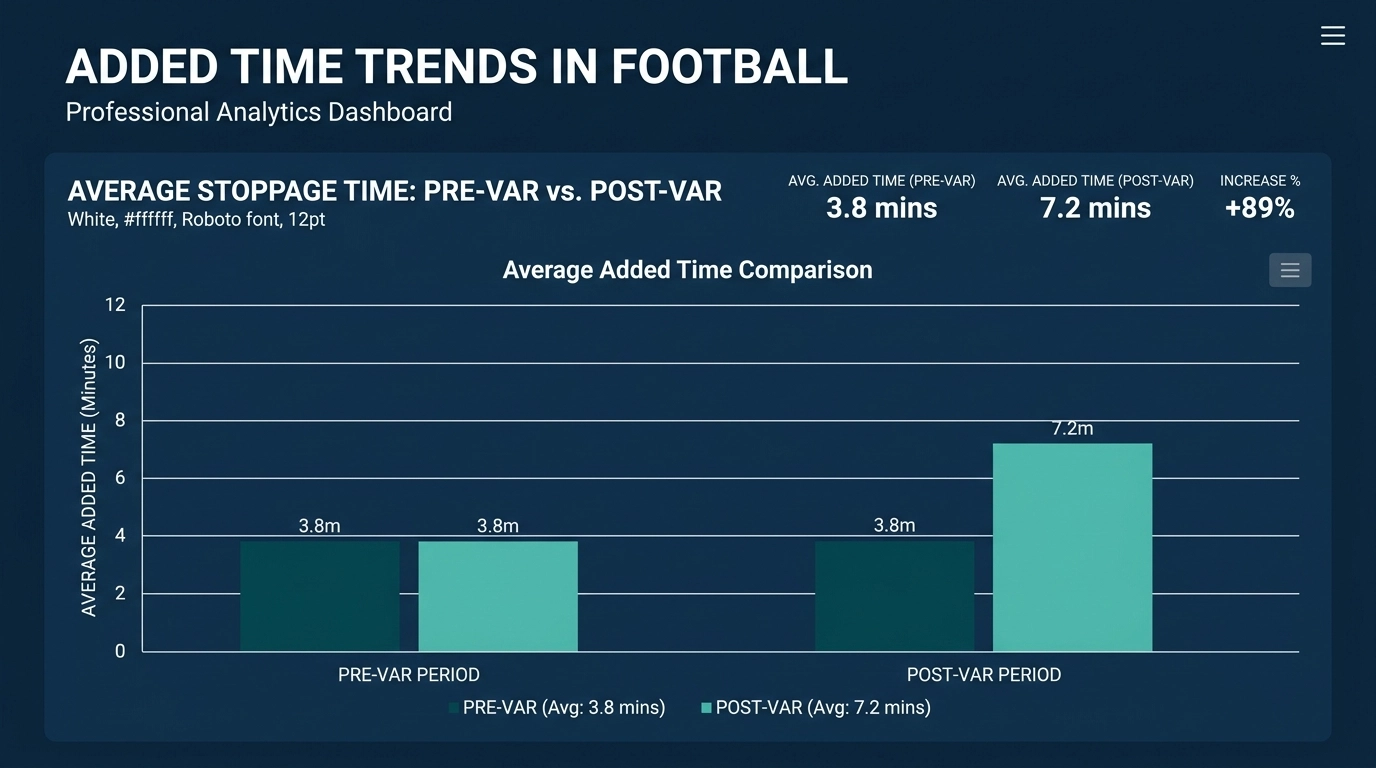
Perhaps the most tangible “VAR effect” is the dramatic increase in added time. VAR reviews, along with the new FIFA/UEFA directives to account for every second lost to celebrations and injuries, have turned the 90-minute match into a 100-minute match.
The traditional “Late Goal” model, which many bettors used for years, has been disrupted. In the past, a 5-minute stoppage time was a rarity; now, 8 to 12 minutes is common in matches with multiple VAR interventions.
This creates a massive opportunity in the In-Play Over/Under markets. The market often still prices the final 10 minutes of a game as if there are only 5 minutes of play left. If a match has had three lengthy VAR reviews, the likelihood of a goal in “Fergie Time” increases exponentially. Professional traders are now using stoppage-time forecasting to place bets at the 85-minute mark, capturing odds that don’t yet reflect the massive amount of extra time about to be announced.
At Predictology, we don’t just provide data; we provide the context you need to beat the market. Our platform is designed to help you quantify the “unquantifiable” aspects of modern football, including the VAR effect.
The “VAR Effect” is not a temporary trend; it is a permanent shift in the game’s architecture. While the casual bettor complains about the delay, the analytical bettor uses that time to find the value. By integrating VAR metrics into your automated betting systems, you can turn one of football’s most controversial technologies into your most consistent source of profit.
Stop treating VAR as an anomaly and start treating it as a statistical variable.
The edge is no longer in knowing who will win, but in knowing how the process of winning has changed. Log in to your Predictology account today and start building your VAR-resistant strategy.
August 24, 2026
Expected Goals (xG); many recreational bettors spend their Saturday afternoons fixated on the final whistle. They track full-time results, late...
August 24, 2026
In the world of football betting, 2026 marks a significant turning point. Just a few years ago, Expected Goals (xG)...
August 24, 2026
Expected Value (+EV) For the majority of football bettors, the live market is a whirlwind of emotion, reaction, and guesswork....
August 24, 2026
System Builder; for most football bettors, the journey starts with a gut feeling. You see a home team with a...
August 24, 2026
Analytics; to move from a casual punter to a professional bettor, you must transition from making “picks” to executing a...
August 24, 2026
Expected Goals (xG); many recreational bettors spend their Saturday afternoons fixated on the final whistle. They track full-time results, late...
August 24, 2026
In the world of football betting, 2026 marks a significant turning point. Just a few years ago, Expected Goals (xG)...
August 24, 2026
Expected Value (+EV) For the majority of football bettors, the live market is a whirlwind of emotion, reaction, and guesswork....
August 24, 2026
System Builder; for most football bettors, the journey starts with a gut feeling. You see a home team with a...
August 24, 2026
Analytics; to move from a casual punter to a professional bettor, you must transition from making “picks” to executing a...
Join the Discussion
We respect your privacy — your email won’t be shown. Fields marked * are required.