September 20, 2026
Beyond the Full-Time Result: Profiting from 1st Half Goals and xG Trends
Expected Goals (xG); many recreational bettors spend their Saturday afternoons fixated on the final whistle. They track full-time results, late...
Value Betting Models; if you’ve spent any time in the sports betting world, you’ve likely heard the term “value” thrown around. It’s often used as a buzzword by tipsters to justify a pick that didn’t go their way. But for professional bettors, value isn’t a vague concept or an excuse: it is the entire foundation of their business.
The truth is, the sportsbooks don’t care if you know who is going to win a match. They care if you know how to price that win. Most casual bettors approach the weekend looking for winners; professional bettors approach the weekend looking for price discrepancies.
In this post, we’re going to pull back the curtain on value betting models and explain the methodology that separates the top 2% of bettors from the rest of the crowd.
The fundamental difference between a recreational gambler and a professional bettor lies in how they perceive an event. A casual fan looks at a match between Manchester City and West Ham and thinks, “City are in great form, they’ll definitely win.” They then place a bet on City at odds of 1.25.
A professional analyst looks at the same match and asks, “What is the specific probability of Manchester City winning this game?” If their value betting models suggest City has an 85% chance of winning, but the odds of 1.25 imply only an 80% chance, they have found +EV betting opportunity.
If the model suggests City only has a 75% chance of winning, they won’t touch the bet: even if they are certain City will walk away with three points. Professionals bet on the price, not the outcome.
EV stands for Expected Value. In the betting world, +EV betting means placing a wager that has a positive expected return over the long term.
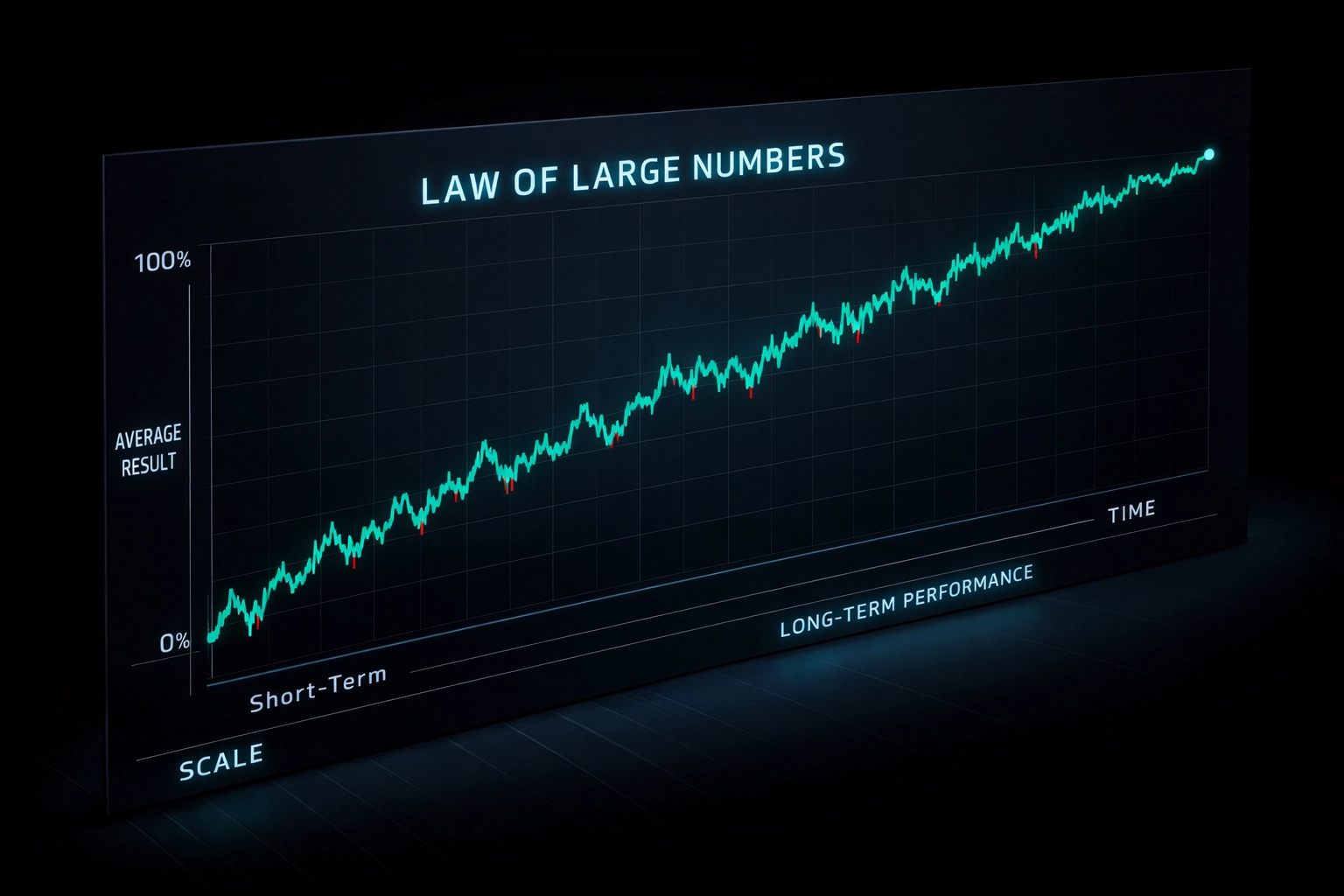
Think of it like a coin toss. If someone offers you £1.10 for every time you land on heads, but you only have to pay £1.00 for every tails, you would take that deal every single time. You might lose five tosses in a row, but if you toss that coin 1,000 times, you are mathematically guaranteed to be in profit because the “odds” you are getting are better than the “true probability” of the event (50%).
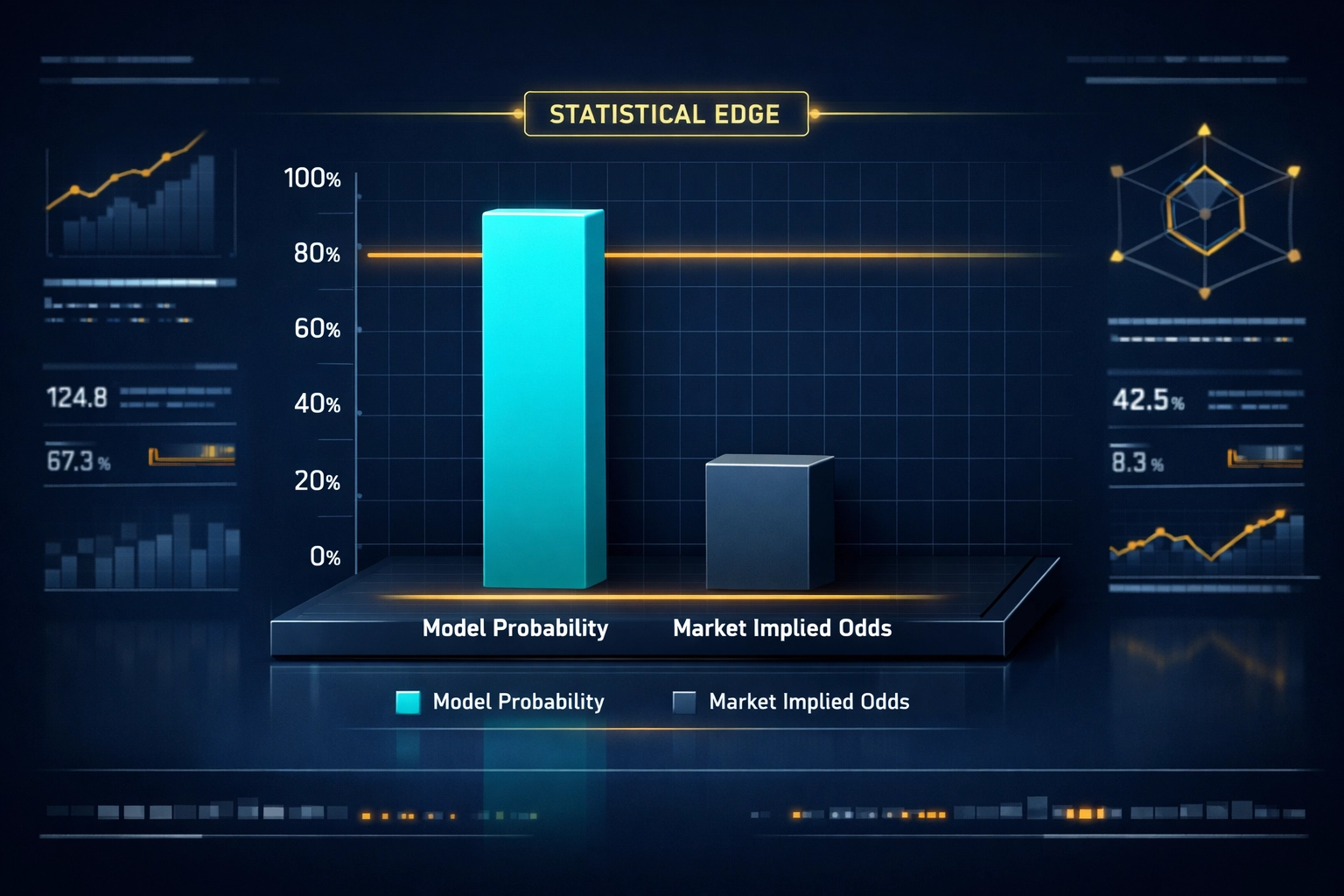
Professional bettors don’t rely on “gut feelings” or “insider info.” They rely on math. To find value, you must be able to convert bookmaker odds into implied probability and then compare that to your own calculated “true” probability.
The formula for Expected Value is:
EV = (True Probability × Decimal Odds) − 1
Let’s look at a real-world example:
In this scenario, you have an Expected Value of +15.5%. This means for every £100 you bet on this specific set of criteria, you expect to make a profit of £15.50 over a large sample size.
One of the biggest “secrets” professionals use to measure their success is Closing Line Value. The closing line is the final set of odds offered by a bookmaker before an event starts. Because the market is most efficient at this point: having absorbed all available information, including team news and heavy betting volume: the closing line is widely considered the most accurate reflection of true probability.
If you consistently bet on a team at 2.10 and they close at 1.90, you have beaten the market. Over time, bettors who consistently beat the closing line are almost always profitable. Value betting models are designed specifically to identify these early discrepancies before the market corrects itself.
Building a model sounds intimidating, but it essentially boils down to data management. Most pros start with a spreadsheet, while more advanced users leverage Predictology’s sports analytics technology to handle the heavy lifting.
The goal of a model is to strip away emotion and focus on variables that actually correlate with winning. Here are the steps professionals take:

Human beings are prone to cognitive biases. We remember the one time a “sure thing” lost, or we overvalue a star player’s injury while ignoring the quality of the bench. Value betting models don’t have these biases.
In football betting, Expected Goals (xG) has changed the game. Traditional bettors look at a 1-0 result and assume the winning team was better. A value bettor looks at the xG. If the match ended 1-0 but the xG was 0.5 to 2.8, the model recognizes that the losing team was actually superior and likely suffered from bad luck.
The next time that losing team plays, the public might bet against them because of their “poor form,” driving their odds up. The value bettor, seeing the underlying data, will swoop in and take the inflated price. This is a classic example of finding value where the general public sees only risk.
If there is one thing professional bettors want to keep under wraps, it’s that even the best models require a massive sample size to prove their worth.
A model with a 5% edge can still go through a “downswing” of 20 or 30 losing bets. This is where most casual bettors quit, claiming the model “doesn’t work.” The professional understands variance. They know that if they have a proven +EV strategy, the math must balance out over 500 or 1,000 bets.
This is why volume is key. To make a living, you can’t just place two bets a week. You need to identify dozens of value opportunities across multiple leagues. This is where automated football betting becomes an essential tool for the modern pro.
In the modern era, manual betting is a bottleneck. By the time you’ve calculated the value on a match in the Belgian Pro League, the odds might have already shifted.
Professional groups use technology to scan hundreds of markets simultaneously. By integrating platforms like Predictology with execution tools like BF Bot Manager, they can automatically place bets the moment their model identifies a +EV opportunity.
This removes the two biggest enemies of profitable betting: time constraints and human emotion.
At Predictology, we provide the engine for your value betting models. Instead of you spending hundreds of hours scraping data and building formulas from scratch, our platform allows you to access deep statistical insights and build systems based on over 350,000 matches. You can test your theories, find the value, and then let the technology handle the execution.

Professional betting isn’t about “getting lucky.” It’s about operating like a hedge fund: identifying undervalued assets (odds) and holding a diversified portfolio of those assets (bets) until the math plays out.
If you want to move away from being a “punter” and start acting like an “analyst,” your first step is to stop looking for winners and start looking for value.
Practical Takeaway: Start by tracking the “Closing Line Value” of your next 10 bets. Compare the odds you took to the odds right before kick-off. If you aren’t consistently beating the closing line, your current “model” needs work.
Ready to stop guessing and start calculating? Explore our features to see how we can help you build your first professional-grade value betting model today.
September 20, 2026
Expected Goals (xG); many recreational bettors spend their Saturday afternoons fixated on the final whistle. They track full-time results, late...
September 20, 2026
In the world of football betting, 2026 marks a significant turning point. Just a few years ago, Expected Goals (xG)...
September 20, 2026
Expected Value (+EV) For the majority of football bettors, the live market is a whirlwind of emotion, reaction, and guesswork....
September 20, 2026
System Builder; for most football bettors, the journey starts with a gut feeling. You see a home team with a...
September 20, 2026
Analytics; to move from a casual punter to a professional bettor, you must transition from making “picks” to executing a...
September 20, 2026
Expected Goals (xG); many recreational bettors spend their Saturday afternoons fixated on the final whistle. They track full-time results, late...
September 20, 2026
In the world of football betting, 2026 marks a significant turning point. Just a few years ago, Expected Goals (xG)...
September 20, 2026
Expected Value (+EV) For the majority of football bettors, the live market is a whirlwind of emotion, reaction, and guesswork....
September 20, 2026
System Builder; for most football bettors, the journey starts with a gut feeling. You see a home team with a...
September 20, 2026
Analytics; to move from a casual punter to a professional bettor, you must transition from making “picks” to executing a...
Join the Discussion
We respect your privacy — your email won’t be shown. Fields marked * are required.