April 05, 2026
Betting Automation: How to Integrate Predictology with BF Bot Manager for Hands-Free Profits
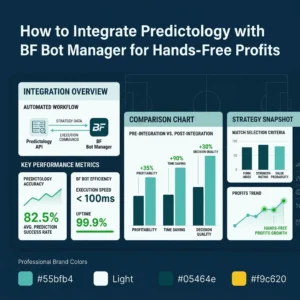
Betting Automation; if you’ve spent any time in the world of professional betting, you know that the biggest enemy isn’t...
Live Betting Alerts; in the modern sports trading landscape, the pre-match markets are more efficient than ever. With thousands of data points processed by bookmakers long before kick-off, finding a significant edge in the traditional “1X2” market can be a grueling task. However, the moment the whistle blows, the landscape changes. Dynamics shift, momentum swings, […]
Live Betting Alerts; in the modern sports trading landscape, the pre-match markets are more efficient than ever. With thousands of data points processed by bookmakers long before kick-off, finding a significant edge in the traditional “1X2” market can be a grueling task. However, the moment the whistle blows, the landscape changes. Dynamics shift, momentum swings, and the mathematics of the game enter a state of constant flux.
This is where live betting alerts become the most powerful tool in a professional bettor’s arsenal. By leveraging value betting software, traders can move away from the “guesswork” of watching a screen and move toward a systematic, data-driven approach to +EV betting.
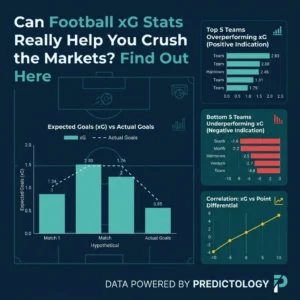
Pre-match odds are built on historical data, team news, and market liquidity. Once a match starts, these odds are adjusted by algorithms based on live events: goals, red cards, and time decay. However, algorithms are not perfect. They often struggle to quantify the “eye test” metrics that data can now capture in real-time, such as sustained pressure, dangerous attacks, and Expected Goals (xG).
A football betting strategy built on live alerts allows you to identify when the market has overreacted: or underreacted: to an event. For example, if a heavy favorite concedes an early goal, their odds will drift significantly. A live alert system can instantly compare this new price against historical recovery rates for elite teams in that specific situation. If the data suggests the team still has a 70% chance of winning, but the odds now imply only a 55% chance, you have found +EV (Expected Value).
Even the most dedicated trader cannot watch twenty matches simultaneously. Human attention is finite, and emotional bias often creeps in when we watch a game live. We might “feel” a goal is coming, but the data might show that while possession is high, there have been zero shots on target.
Live betting alerts remove the emotional noise. They act as a 24/7 digital scout, scanning hundreds of matches across the globe and notifying you only when your specific, mathematically-backed criteria are met. This allows for a level of scale that was previously impossible for individual bettors.
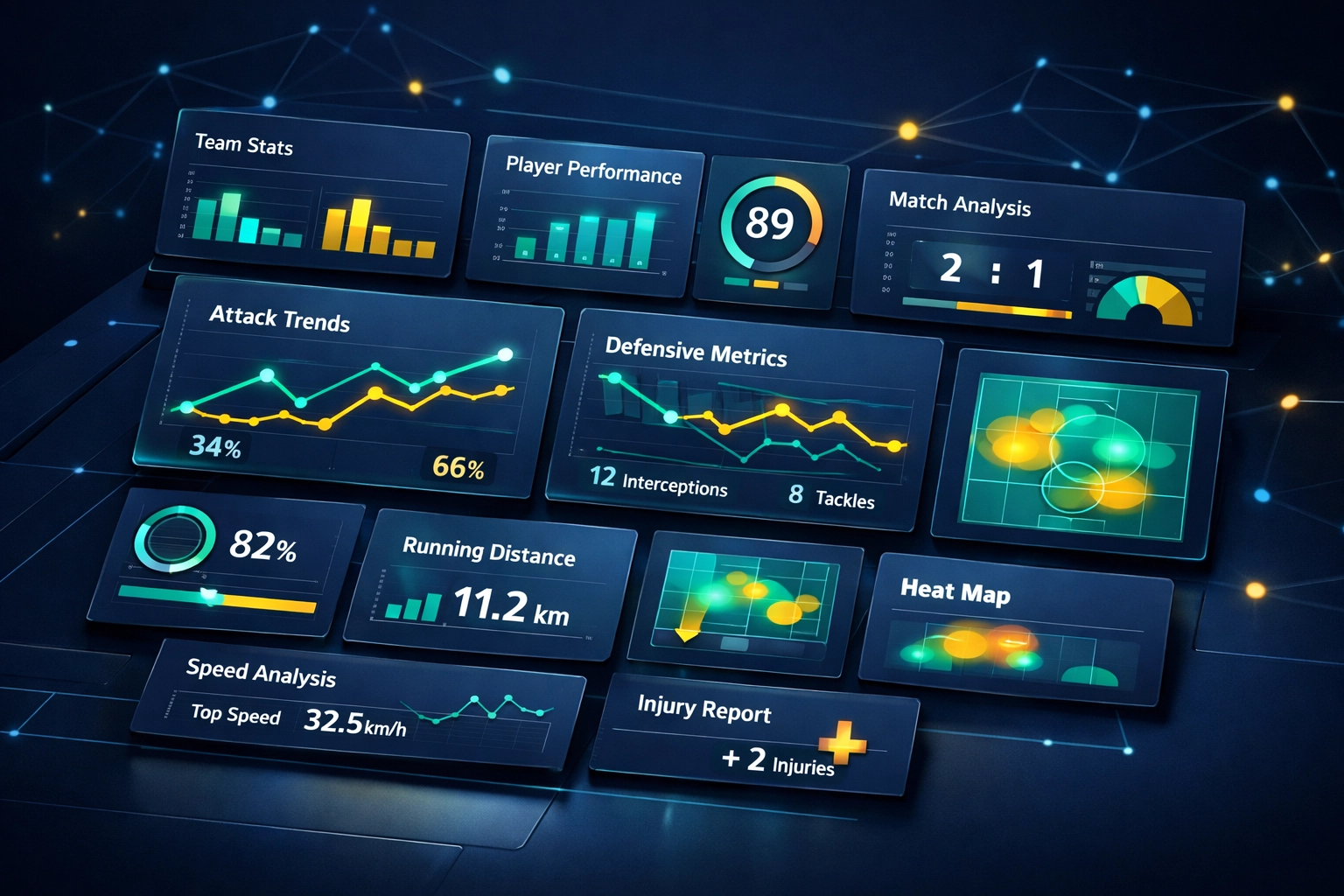
The core of any successful alert system is the integration of real-time statistics with historical benchmarks. At Predictology, we emphasize the importance of backtesting betting strategies to ensure that your live triggers are rooted in long-term profitability.
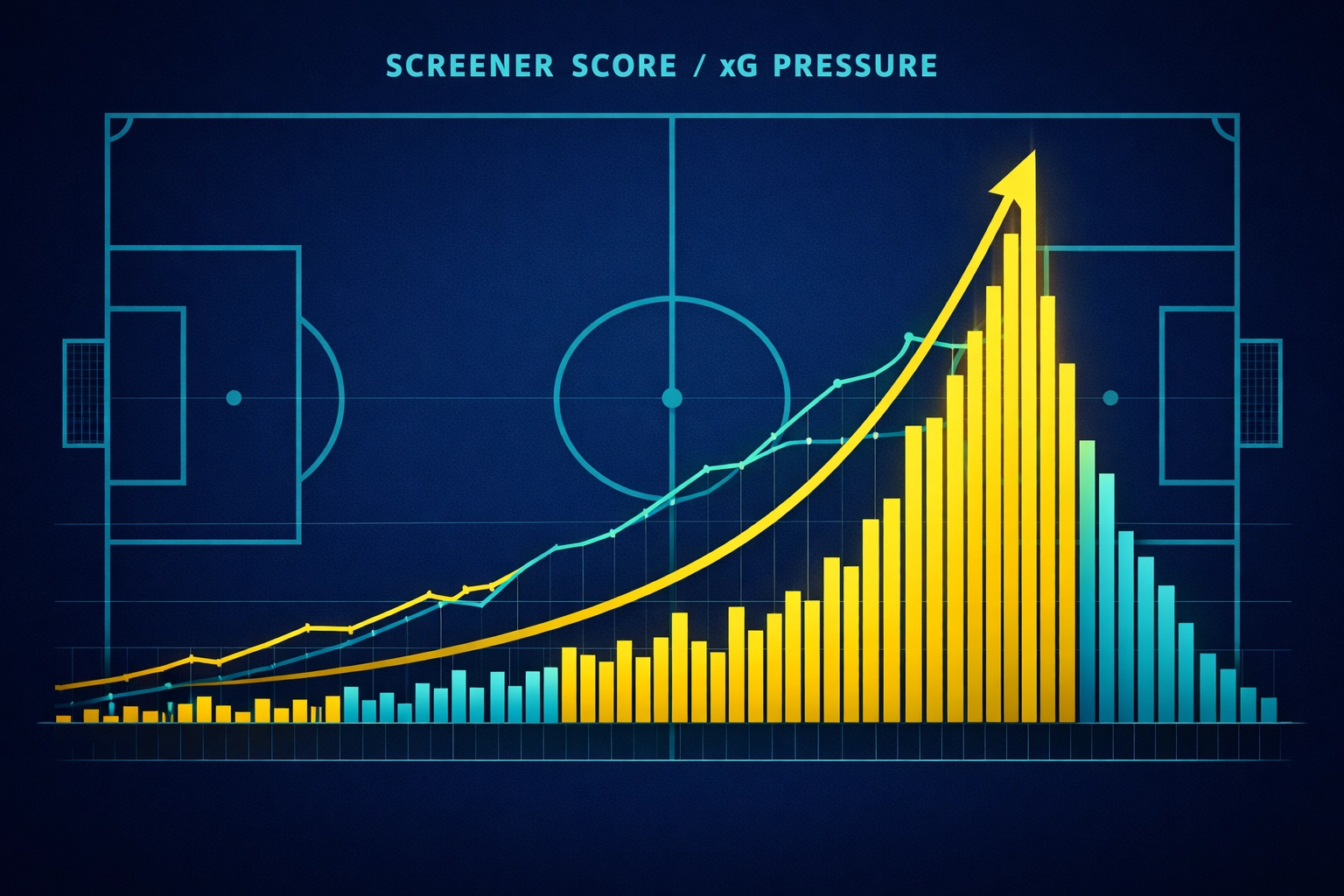
Value betting software works by running “Screener Scores.” These scores analyze the current state of a match: such as the number of corners, dangerous attacks, and shots in the last 10 minutes: and compare them to the pre-match expectations.
In the live market, value is a fleeting commodity. An inefficiency might only exist for 30 to 60 seconds before the sharp money moves the line or a goal is scored, closing the window of opportunity. Most professional alert systems aim for a notification delay of under 40 seconds.
Whether delivered via Telegram or push notification, these alerts provide the essential data points you need to make a decision:
By receiving this information instantly, you can execute trades with the confidence that you are beating the closing line, which is a fundamental requirement for understanding EV in football betting.
There are several ways to configure alerts to find high-probability value. Here are three common frameworks used by professional analysts.
This strategy targets matches tied or with a one-goal lead in the final 15 minutes. The alert triggers when the “Screener Score” for dangerous attacks reaches a specific threshold (e.g., more than 1.5 dangerous attacks per minute in the last 10 minutes). When the market assumes a game is fizzling out, but the data shows a spike in intensity, the “Over 0.5 Goals” or “Next Goal” market often offers significant value.
Sometimes, the scoreline doesn’t reflect the match’s reality. An underdog might be leading 1-0, but the favorite is dominating every statistical category. A live alert can notify you when the favorite’s “Price to Win” hits a certain level (e.g., 2.0 or 2.10) while their xG is significantly higher than the leading team. This allows you to back the superior side at a much better price than was available pre-match.
Corners are often a byproduct of sustained pressure and “wing play.” By setting alerts for games where a team is trailing and has a high number of shots blocked or crosses made, you can identify value in the “Race to X Corners” or “Alternative Corner” markets before the bookmaker adjusts the line for the increased pressure.
To avoid “alert fatigue,” it is crucial to set strict parameters. Receiving 100 alerts a day is useless if 90 of them don’t represent true value. Successful traders use filters to narrow the field.
For those looking to take this a step further, integrating these alerts with execution tools can lead to a fully automated football betting setup, where the software not only finds the value but places the bet for you based on your predefined rules.
While live betting alerts provide a massive advantage, they are not a magic wand. Live markets often carry higher “juice” (the bookmaker’s margin) than pre-match markets. This means your edge must be large enough to overcome the increased cost of placing the bet.
Furthermore, liquidity can be an issue in play. On betting exchanges, you might find a great price, but there may not be enough money in the market to match your desired stake. This is why professional bettors often use alerts to target “Major” markets: Match Odds, Over/Under Goals, and Asian Handicaps: where liquidity remains high even deep into the second half.
Not every attack is a goal-scoring opportunity. It is important to remember that live alerts are a tool for identification, not a guarantee of outcome. The goal of using live betting alerts is to put yourself on the right side of the probability curve consistently. If you place 1,000 bets where you have a 5% edge, the variance will eventually smooth out, leaving you with a sustainable profit.
To begin finding value in real-time, you don’t need to rebuild the wheel. Start by defining one specific scenario where you believe the market often gets it wrong.
By moving from reactive betting (betting because you are watching) to proactive betting (watching because you received an alert), you align yourself with the professional minority who treat football betting as a high-frequency financial market rather than a game of luck.
April 05, 2026
Betting Automation; if you’ve spent any time in the world of professional betting, you know that the biggest enemy isn’t...
April 05, 2026
Value Betting Models; if you’ve spent any time in the sports betting world, you’ve likely heard the term “value” thrown...
April 05, 2026
Backtesting Betting Strategies; we’ve all been there. You spend hours, maybe even days, scouring through historical football data. You’re looking...
April 05, 2026
If you’ve spent more than five minutes in a football betting forum or scrolling through sports on X lately, you’ve...
April 05, 2026
Automated Football Betting; for many years, the primary barrier to professional-level football betting wasn’t just finding an edge; it was...
April 05, 2026
Betting Automation; if you’ve spent any time in the world of professional betting, you know that the biggest enemy isn’t...
April 05, 2026
Value Betting Models; if you’ve spent any time in the sports betting world, you’ve likely heard the term “value” thrown...
April 05, 2026
Backtesting Betting Strategies; we’ve all been there. You spend hours, maybe even days, scouring through historical football data. You’re looking...
April 05, 2026
If you’ve spent more than five minutes in a football betting forum or scrolling through sports on X lately, you’ve...
April 05, 2026
Automated Football Betting; for many years, the primary barrier to professional-level football betting wasn’t just finding an edge; it was...

Join the Discussion
We respect your privacy — your email won’t be shown. Fields marked * are required.